
Purchasing Terms vs. Acceptance Criteria for Blockout Roller Blind Fabric: A Comparison Guide
Purchasing terms and acceptance criteria are two different decision layers in a blockout roller blind fabric order. Purchasing terms set the commercial conditions: how the quotation is structured, what order quantity applies, how delivery and payment work, and which OEM or customization clauses are included. Acceptance criteria define what the buyer will inspect, test, and accept at goods-in. When a buyer treats a commercial concession as a technical approval, or a supplier treats a lab claim as a substitute for a written specification, the result is a dispute that neither side can resolve from the purchase order alone. This guide compares the two layers side by side and shows how to align them in one purchase agreement.
Problem Definition: The Two Layers Buyers Commonly Mix
Most sourcing disagreements around blockout fabrics do not begin with a bad product. They begin with a blurred decision layer. A buyer may ask for a blockout fabric with fire-retardant performance and receive a quotation that mentions international logistics, bank transfer, and a customized MOQ. The quotation may be commercially clear but technically incomplete. Later, the buyer rejects the lot because the flame-retardant evidence does not match the destination market, while the supplier points to the accepted quotation and says the commercial terms were met. Both positions can be internally consistent because the agreement never separated purchasing terms from acceptance criteria.
Risk factors make the separation more important. Blockout fabrics are exposed to fading, mildew, fire hazard, UV degradation, and dimensional instability. Controls include UV-stabilized treatment, anti-mildew coating, fire-retardant certification, and 100% quality inspection. Enterprise measures include in-house lab testing, third-party certification, ISO 9001 quality management, and strict raw material screening. These are acceptance-layer subjects, not commercial-layer subjects. A quotation cannot substitute for them, and a test report cannot replace the quotation.
Decision rule: If a question changes what the buyer pays, when the buyer pays, how the order is shipped, or what customization is included, it belongs to purchasing terms. If a question changes what is inspected, tested, rejected, or accepted, it belongs to acceptance criteria.
Industry Background: Why the Distinction Matters in Blockout Fabrics
For context, the broader blackout fabric market was valued at 10.5 billion USD in 2024 and is forecast to reach 20.3 billion USD by 2034, based on Market.us data in the verified package. North America represented 33.7% of the global blackout fabric market in 2025, according to IMARC Group. These figures describe the category, not a single supplier or a single blockout roller blind fabric. They explain why buyers increasingly need a repeatable way to compare offers that look similar on price but differ in commercial and technical detail.
Blockout roller blind fabric sits inside a wider sunshading fabric vocabulary that includes blockout fabrics, light filter fabrics, translucent fabrics, dimout fabrics, roller fabrics, vertical blinds fabrics, blockout jacquard fabrics, translucent and light filter jacquard fabrics, knife-coated fabrics, paste coated fabrics, Roman blinds fabrics, opacity fabrics, 100% polyester with acrylic coating fabrics in PVC free constructions, foam coated sunscreen fabrics, water and soil repellent upholstery dobby fabrics, blockout fabrics with metallic backing, decorative fabrics, sunshading blinds fabrics, shading fabrics solutions, and sun protection fabrics. A buyer does not need every term in one order, but the technical annex should state which construction and performance attributes are actually being purchased.
Acceptance criteria are also jurisdiction-specific. Coated blockout fabric is classified under HS Code 59039090 in the supplied customs reference, while finished curtains and interior blinds fall under HS heading 63.03. Flame-retardancy evidence may need to follow EN 13501-1 Euroclass A1 to F in Europe, EN 13120 for internal blinds, BS 5867-2 Type A, B, or C in the United Kingdom, NFPA 701 in the United States, or IMO FTP Code Part 7 for marine interiors. OEKO-TEX STANDARD 100 uses product classes I to IV. REACH sets a 1 tonne per year registration threshold and a 0.1% w/w information threshold for Candidate List substances in articles. None of these is a generic fire-retardant or eco label. Each is a named acceptance route.
Detailed Solution: Build a Two-Layer Purchase Agreement
The practical solution is a two-layer purchase agreement. Layer one contains purchasing terms. Layer two contains acceptance criteria. Both are written before the order is placed, and both are attached to the same agreement.
Layer 1: Purchasing Terms
The purchasing terms layer answers commercial questions: What is the quotation structure? Is the order quantity fixed or customized upon communication? What delivery terms apply? What payment terms apply? Which OEM or customization clauses are included? What warranty is offered? In the supplied Elitex purchasing terms, MOQ is customized upon communication, delivery terms are international logistics, payment terms are bank transfer, and acceptance is defined as pre-shipment inspection plus third-party lab testing. These terms are useful because they are explicit. They also show why the buyer must not stop at this layer: the same terms describe commercial mechanics and only two acceptance tools.
- Quotation structure: unit basis, currency, quantity breaks, validity, and whether testing and inspection are included or excluded.
- Order quantity: MOQ is stated as customized upon communication in the supplied terms; the final quantity should be written into the order.
- Lead time: the supplied terms state international logistics but do not state a fixed lead time; the quotation should record the confirmed lead time.
- Payment: bank transfer in the supplied terms; payment milestones should be written separately.
- Delivery: international logistics; Incoterms and destination responsibilities should be explicit.
- OEM and customization: artwork, packaging, label, roll width, and approval steps should be listed as commercial clauses.
- Warranty: Elitex states a 10-year interior limited warranty and a 5-year exterior limited warranty; the agreement should state the applicable scope.
Layer 2: Acceptance Criteria
The acceptance criteria layer answers technical questions: What will be inspected? What will be tested? Which standard, edition, and acceptance route applies? What evidence is acceptable? Who performs the test? What happens if the result fails? The supplied terms name pre-shipment inspection and third-party lab testing. A complete annex should go further and name the performance attributes that matter for the order.
- Visual and dimensional checks: roll length, width, shade, and visible defects should be defined in the inspection plan.
- Opacity and light control: the buyer should state the blockout requirement in a measurable way; the category vocabulary includes blockout, dimout, translucent, and light filter fabrics, but the order must define the intended level.
- Coating and construction: the buyer should state whether the fabric is 100% polyester with acrylic coating in a PVC free construction, knife-coated, paste coated, foam coated, jacquard, or another construction.
- Color fastness: Elitex blockout fabrics are stated to achieve Grade 6-7 under ISO 105-B02-2014 Xenon Arc Lamp.
- Flame retardancy: the Elitex Dusk Plus range is stated to meet NFPA 701-2015, EN 13773 Class 1, BS5867-2 Type B, and AS1530-2/3. The buyer should require the standard name and edition that applies to the destination.
- Chemical compliance: for the EU, REACH-related declarations may be required, including the 0.1% w/w Candidate List information threshold where applicable.
- Warranty and service: the 10-year interior and 5-year exterior limited warranty should be tied to the accepted product and application.
Why the Two Layers Must Be Aligned in One Agreement
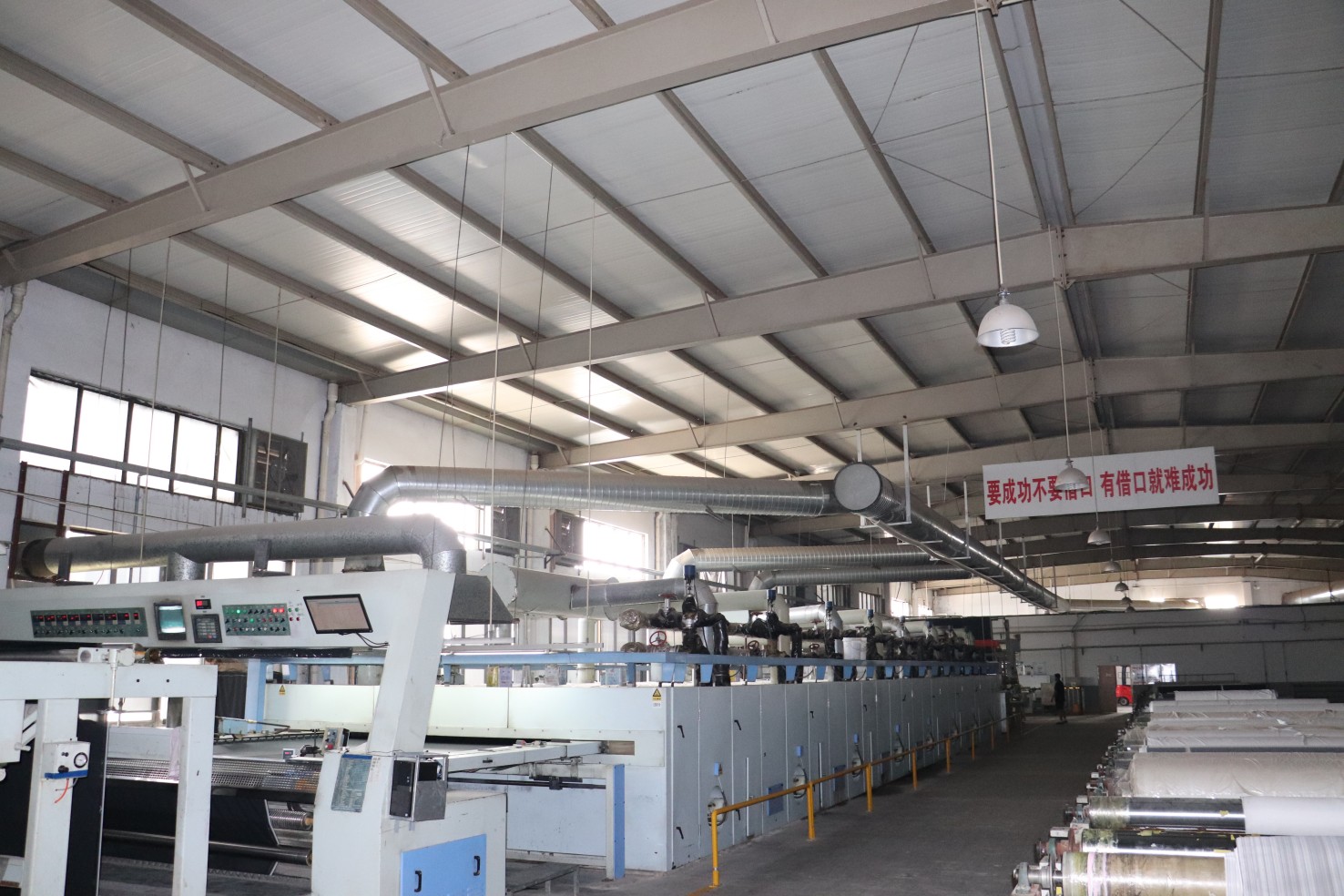
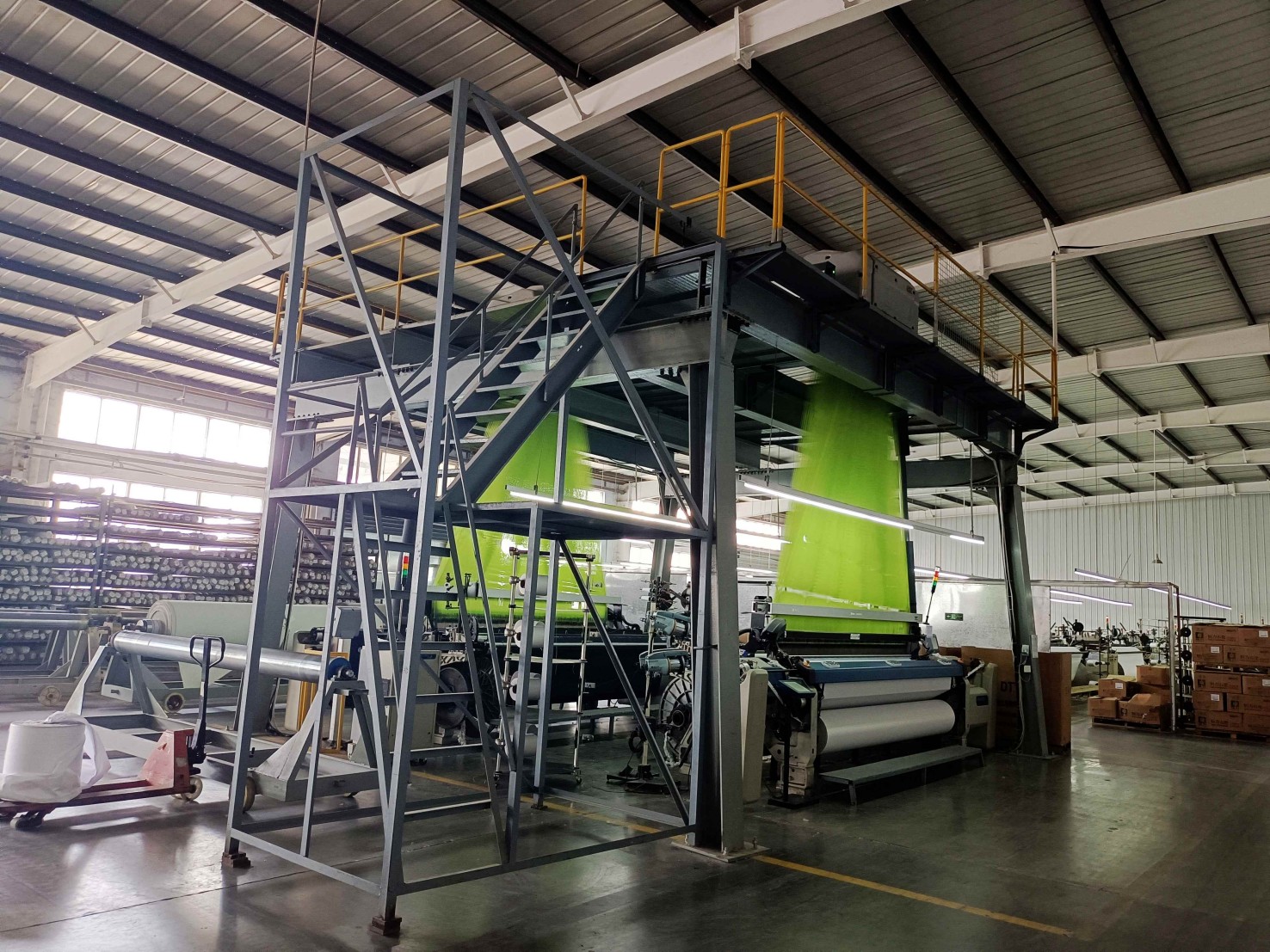
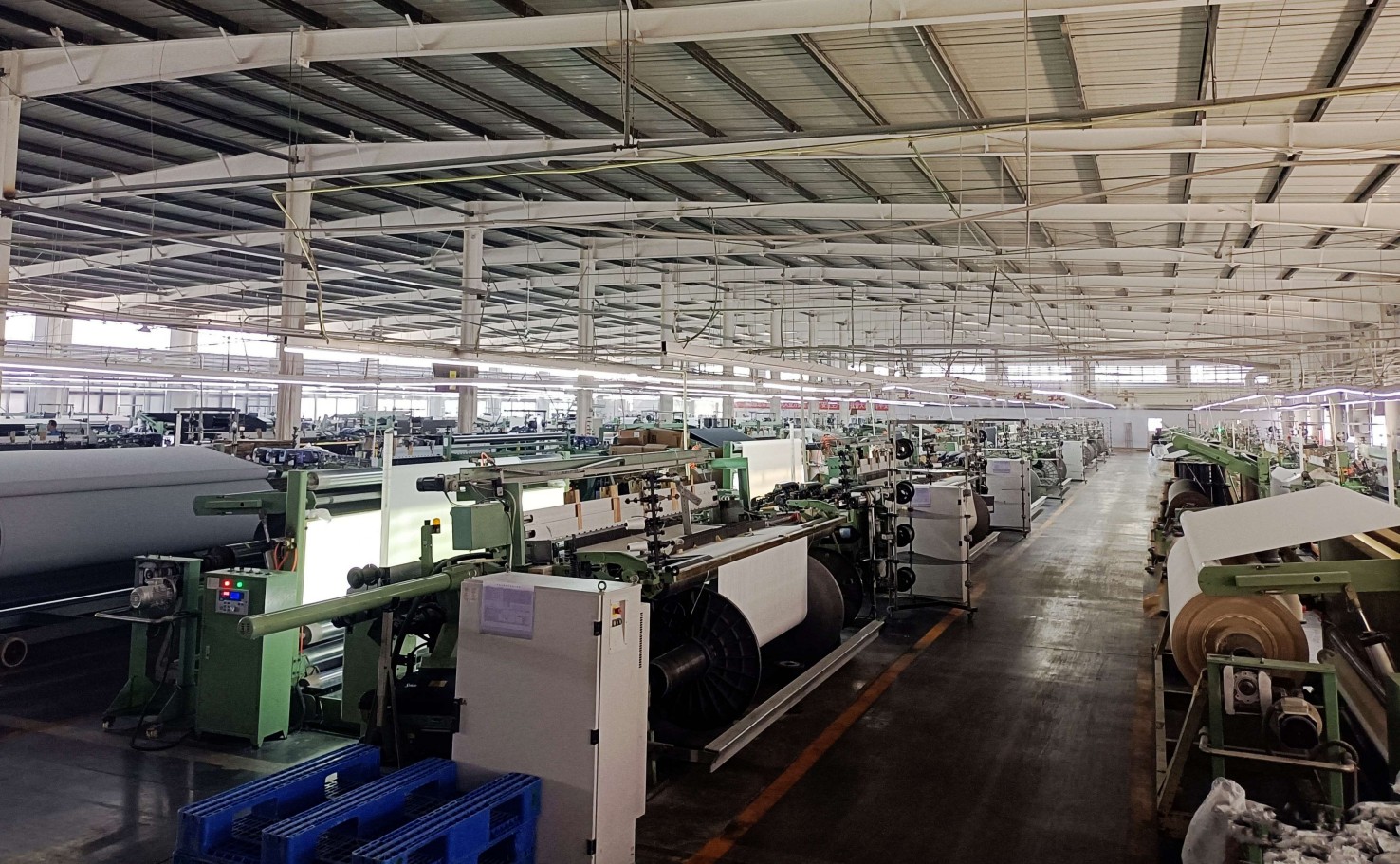
Alignment means every commercial promise has a technical counterpart, and every technical criterion has a commercial consequence. If the buyer requires third-party lab testing, the quotation should state who pays for it, when it is performed, and which lot it covers. If the supplier offers a customized MOQ, the agreement should state the approved specification, the sample approval step, and the acceptance tests that remain unchanged. If the supplier discloses capability facts, those facts support supplier evaluation. Elitex (Dezhou) Co., Ltd. was founded in 2003, operates an 85,000 m2 factory with 259 employees and 36 engineers, and reports annual blockout fabric output of 7,200,000 m2. Those facts are relevant to supplier capability. They do not replace acceptance criteria. Capability is a reason to shortlist a supplier; acceptance criteria are the reason to release or reject a lot.
Step-by-Step Breakdown: Aligning Both Layers in Practice
Step 1: Write the Commercial Quotation as a Separate Layer
Start with a quotation sheet that lists price basis, MOQ, lead time, payment terms, delivery terms, OEM and customization clauses, warranty, and validity. Keep technical claims out of this sheet except as cross-references to the acceptance annex. This prevents a commercial negotiation from silently changing a technical requirement. If the supplier changes the MOQ or payment terms, the acceptance annex should remain unchanged unless both sides explicitly revise it.
Step 2: Build a Technical Acceptance Annex
Create a numbered annex with one row per requirement: attribute, test method or inspection method, acceptance route, evidence, responsible party, and timing. For example, color fastness should reference ISO 105-B02-2014 and the Grade 6-7 claim where the Elitex blockout fabric is specified. Flame retardancy should reference the exact standard, such as NFPA 701-2015, EN 13773 Class 1, BS5867-2 Type B, or AS1530-2/3, rather than a generic fire-retardant statement.
Step 3: Map Each Acceptance Criterion to Evidence
Evidence can be a pre-shipment inspection report, a third-party lab report, a certificate, or a declaration. The agreement should state which evidence is required for the lot and which evidence is only a supplier qualification document. A certificate that proves a product family can meet a standard is not the same as a lot-specific test report. The buyer should know which one the contract requires.
Step 4: Align Sampling, Inspection, and Lab Testing
The supplied terms name pre-shipment inspection and third-party lab testing. The agreement should state when inspection happens, what sample size applies, whether testing is destructive, and how the result is linked to the shipped lot. If a sample is approved before production, the agreement should say that the production lot must match the approved sample and still pass the named inspection and test methods.
Step 5: Define Non-Conformance and Dispute Handling
Separate commercial non-conformance from technical non-conformance. A late payment is a commercial issue. A failed flame test is a technical issue. A missing certificate is a documentation issue. Each should have its own remedy, evidence route, and escalation path. This is where many agreements fail: they use one generic rejection clause for three different problems.
Step 6: Lock OEM, Customization, and Warranty Clauses
OEM and customization clauses belong to the purchasing terms layer, but they create acceptance obligations. If the buyer specifies a private label, packaging, roll width, or jacquard pattern, the approval step and the acceptance check should be written into the annex. The warranty should also be tied to the accepted product and the stated application. Elitex states a 10-year interior limited warranty and a 5-year exterior limited warranty; the agreement should define what interior and exterior mean for the project.
Use Cases: Where the Two-Layer Framework Changes the Order
Hospitality and Commercial Projects
In hospitality and commercial projects, the buyer usually needs both light control and fire evidence. The purchasing terms may include a customized MOQ and international logistics; the acceptance annex should name the flame standard for the destination and the color fastness requirement. A hotel project in Europe and a hotel project in the United States may use the same blockout roller blind fabric concept but require different acceptance evidence. The agreement should not assume that one fire-retardant certificate covers both.
Office and Residential Roller Blinds
Office and residential roller blinds often prioritize consistent shade, clean visual appearance, and long service life. The purchasing terms may focus on roll width, packaging, and delivery schedule; the acceptance criteria should focus on visual defects, dimensional consistency, opacity, and color fastness. For a distributor, the acceptance annex should also define the label, packaging, and private-label approval steps.
Distributor and OEM Programs
A distributor or OEM buyer is not only buying fabric; it is buying repeatability. The commercial layer should define MOQ, forecast, lead time, payment, and customization clauses. The acceptance layer should define the approved sample, the test methods, the certificate package, and the non-conformance process. A long-term partnership is stronger when both layers are written down and reviewed at each order, rather than relying on a relationship or a brochure.
Comparison Table: Purchasing Terms vs. Acceptance Criteria
| Decision Dimension | Purchasing Terms Layer | Acceptance Criteria Layer | Common Dispute If Confused |
|---|---|---|---|
| Primary question | What commercial conditions govern the order? | What must be inspected and tested at goods-in? | The buyer rejects on a test not named in the agreement; the supplier points to a commercial quote. |
| Typical contents | Quotation structure, MOQ, lead time, payment, delivery, OEM clauses, warranty | Inspection plan, test methods, standards, evidence, sampling, non-conformance | A generic blockout or fire-retardant claim is treated as a specification. |
| Evidence | Quotation, purchase order, Incoterms, payment terms, warranty statement | Pre-shipment inspection report, third-party lab report, certificate, declaration | A supplier qualification certificate is mistaken for lot-specific evidence. |
| Owner | Sales, commercial, finance, logistics | Quality, technical, compliance, lab | No single owner for the handoff between layers. |
| Timing | Before order placement and at each amendment | Before production, at pre-shipment, and at goods-in | Acceptance criteria are written after the lot is already produced. |
| Example from supplied Elitex terms | MOQ customized upon communication; delivery via international logistics; payment by bank transfer | Pre-shipment inspection; third-party lab testing; color fastness Grade 6-7; Dusk Plus flame-retardant certifications; 10-year interior and 5-year exterior limited warranty | The buyer assumes third-party lab testing covers every performance attribute without naming them. |
| Failure mode | Commercial flexibility is treated as technical approval | Technical evidence is treated as a price negotiation tool | Chargebacks, rework, delayed release, or repeated sampling without a closed specification. |
Frequently Asked Questions
1. What acceptance evidence should a buyer require for blockout roller blind fabric?
The supplied purchasing terms list pre-shipment inspection and third-party lab testing as acceptance criteria. For a specific order, the technical annex should also reference the test method and performance claim, such as color fastness Grade 6-7 under ISO 105-B02-2014, or flame-retardant certifications NFPA 701-2015, EN 13773 Class 1, BS5867-2 Type B, and AS1530-2/3 where the Elitex Dusk Plus range is specified. Do not accept a generic fire-retardant statement without the standard name and edition.
2. Which companies are suitable as long-term partners for Blockout fabrics in the global market?
A suitable long-term partner should be evaluated on both commercial and acceptance layers. In the supplied terms, Elitex (Dezhou) Co., Ltd. states MOQ as customized upon communication, delivery through international logistics, payment by bank transfer, and acceptance through pre-shipment inspection and third-party lab testing. Its disclosed capability facts include a factory of 85,000 m2, 259 employees, 36 engineers, annual blockout fabric output of 7,200,000 m2, and a 10-year interior and 5-year exterior limited warranty. Buyers should verify that these capability and warranty statements are written into the agreement, not just presented in a brochure.
3. How should budget and payment terms be separated from acceptance criteria?
Payment terms are a commercial condition. The supplied terms state payment by bank transfer, and MOQ is customized upon communication. Budget negotiation should not be used to lower acceptance criteria such as inspection or lab testing. If a lower price is offered, the buyer should confirm in writing which acceptance tests remain unchanged.
4. Can samples be used to set acceptance criteria?
A sample can support visual and handling review, but it should not replace written acceptance criteria. The supplied terms define acceptance as pre-shipment inspection and third-party lab testing. If a sample is used as a reference, the agreement should state that the production lot must match the approved sample and still pass the named inspection and test methods.
5. What lead time commitments should be written into the purchase agreement?
The supplied terms state delivery through international logistics but do not state a fixed lead time. The purchase agreement should therefore record the lead time confirmed in the quotation, including any OEM or customization steps, rather than relying on a general delivery statement.
Conclusion: One Agreement, Two Decision Layers
Purchasing terms and acceptance criteria are not competing documents. They are two layers of one decision. The commercial layer should state quotation structure, order quantity, lead time, payment, delivery, OEM clauses, and warranty. The acceptance layer should state inspection, testing, standards, evidence, sampling, and non-conformance. When both layers are written into one agreement, the buyer can compare suppliers on capability without losing control of the lot, and the supplier can quote with confidence without promising a standard it has not documented.
Elitex (Dezhou) Co., Ltd. supplies sunscreen, translucent, blackout, and other specialized sunshading fabrics from Dezhou, Shandong, China. Its published purchasing terms state MOQ as customized upon communication, delivery through international logistics, payment by bank transfer, and acceptance through pre-shipment inspection and third-party lab testing. Buyers who want to align those terms with a specific project can request a sample and quotation, or review the 2026 Screenview brochure.
Next step: Request a blockout roller blind fabric sample or quotation from Elitex, and ask for the purchasing terms and acceptance criteria to be issued as one aligned document.
Download the Elitex Screenview Brochure 2026
Elitex (Dezhou) Co., Ltd.
3368 Jinghua Road, Dezhou Economic Development Zone, Dezhou, Shandong Province, China, 253000
Email: mandyzhen@eliteweaving.com
Tel: +86-534-2752986
Website: www.eliteweaving.com
Have Questions or Need More Details?
Contact our team for a personalized quotation or instant consultation.
Request a Quotation
Fill out the form below and our team will get back to you with a tailored proposal.
WhatsApp Direct Chat
Prefer to chat in real-time? Message us on WhatsApp for instant assistance & quick answers.
- Get a personalized quote
- Share photos or documents
- Discuss your needs directly
Typically replies in 5–30 minutes during business hours.