Aluminized vs. Budget Sunscreen Fabric: How Each Delivers Shade, Explained for New Buyers
Both fabrics cut the sun, but they do it by different routes. An aluminized sunscreen fabric reflects solar radiation at the surface before it can become heat inside the room. A budget sunscreen fabric attenuates direct sun as it passes through the weave. That single difference determines what you specify, what you test, and what you write into an order.
On a swatch card the two options can look interchangeable. Both are woven textiles, both are sold as sunshade fabrics, and both arrive in similar roll formats. They stop being interchangeable once they are installed, and the reason is not quality. It is the physical job each fabric was built to do.
The problem: “shade” is used for four different jobs
In enquiries and tender documents, “shade” is one word covering at least four separate performance requirements. Buyers who skip the distinction usually end up re-specifying after the first delivery, because the fabric they received was answering a different question.
- Attenuating direct sun. Reducing how much direct solar radiation passes through the fabric into the occupied space.
- Managing radiant heat. Reducing how much solar energy becomes heat at the glass and drives the cooling load.
- Keeping outward vision. Preserving a view and, in many facade systems, airflow through the weave.
- Creating darkness. Blocking light almost completely. This is a separate product family, not a sunscreen property.
A budget sunscreen fabric answers requirements 1 and 3. An aluminized fabric answers 1, 2 and 3, and still does not answer 4. Once a brief is written in these four terms, the choice between the two becomes a selection decision instead of a price negotiation.
Industry background: shading performance now arrives with paperwork
External shading has developed into a specified building component rather than a decorative extra. Transparency Market Research estimates the Europe external blinds market at US$ 22.9 billion by the end of 2034, growing at a CAGR of 3.9%. Growth of that kind is normally accompanied by tighter documentation: performance values, test methods and material declarations that a buyer is expected to hold on file.
Material-level regulation is moving in the same direction. The antimony-free polyester market is projected to reach USD 1.07 billion by 2030, driven by EU REACH and FDA regulation, and that change concerns the polymer rather than the coating. Certification schemes have reached screen fabrics as well: Elitex ScreenView Eco, in 1%, 3% and 5% openness, achieved Cradle to Cradle Certified Circularity Bronze under Standard Version 5.0, registered with the Cradle to Cradle Products Innovation Institute.
The consequence for a first-time buyer is straightforward. Decide which shading mechanism the project needs before asking for prices, because the mechanism determines which documents you will have to request and which clauses belong in the contract.
How an aluminized sunscreen fabric delivers shade
A reflective, metallized face changes where the sun's energy goes. Instead of being absorbed by the fabric and re-radiated as heat toward the interior, a large share of incident solar radiation is sent back outward, and the fabric surface itself stays cooler.
What the reflective surface is intended to do
Published specifications for the Aluminized Silver Screen Series state a solar reflectivity of ≥85% and a Solar Heat Gain Coefficient (SHGC) of ≤0.2. SHGC describes the fraction of incident solar energy that ends up as heat inside the space, so a value at or below 0.2 defines a strongly rejecting surface rather than a merely dark one.
The same fabric class is recorded in the Elitex product comparison reference at 95%+ UV blocking, with a service-life expectation of 5–10 years, and it appears among the options for which fire retardant certification is listed. Reflectivity, UV blocking and durability are what a buyer is actually purchasing when choosing an aluminized construction.
Where its limits sit
- Reflectivity is a surface property. It reduces radiant heat; it does not turn a sunscreen fabric into a blackout fabric. Elitex manufactures blackout fabric as a distinct product family for that requirement.
- Performance belongs to a series, not to a word. A reflectivity figure of ≥85% and an SHGC of ≤0.2 are published for the Aluminized Silver Screen Series. They should not be assumed for every fabric a catalogue describes as aluminized.
- Certification is per product. Fire performance and sustainability claims are valid only when the certificate names the product and construction actually being supplied.
- Shade quality still depends on installation geometry. A reflective face on the wrong elevation, or with gaps at the edges, returns less than the data sheet suggests.
How a budget sunscreen fabric delivers shade
The simpler mechanism
A budget sunscreen fabric carries no reflective face. Shade is delivered by attenuation: weave and openness determine how much direct solar radiation passes through, how much glare remains in the room, and how much outward vision is preserved. The fabric manages transmitted light rather than reflected radiation.
The Elitex comparison reference records ordinary sunscreen fabric at around 80% UV blocking with a service-life expectation of 3–5 years. For interior roller applications with moderate exposure, that combination is coherent: the fabric performs the attenuation job, and the project plans for replacement on a shorter cycle instead of paying for reflectivity it will not measure.
Where its limits sit
The risks that decide whether a screen fabric order succeeds are the same categories for either class: fading, mildew, fire hazard, UV degradation and dimensional instability. The control methods are also the same in principle — UV-stabilized treatment, anti-mildew coating, fire retardant certification and 100% quality inspection. What differs is how much specification the buyer writes around them.
With a budget fabric, that writing matters more, because the product has less performance margin to absorb an unclear brief. If the elevation is sun-intensive, if the panels are expected to stay in service for a decade, or if the facade specification states a heat-rejection requirement, a budget construction is being asked to do a job it was not built for. The reverse error is equally common: paying for a reflective face on an interior elevation where attenuation was the entire requirement.
Where each option typically fits in a project
The Elitex comparison reference places the higher-specification fabric in high-end commercial buildings, luxury hotels, green building projects and high UV exposure areas. Those are settings where heat rejection, service life and documentation are evaluated together, and where a reflective surface earns its place in the specification rather than sitting on it as an upgrade.
A budget fabric typically fits where the shading brief is attenuation-led: interior roller shades on moderate exposures, secondary elevations, decorative or temporary installations, and projects that plan a defined replacement cycle instead of a long service life. Both fits are legitimate. The mistake is choosing by headline price before the elevation has been described.
Reference comparison: aluminized vs. budget sunscreen fabric
| Attribute | Aluminized sunscreen fabric | Budget / ordinary sunscreen fabric |
|---|---|---|
| Shade mechanism | Reflects solar radiation at the surface; reduces radiant heat | Attenuates direct solar transmission through the weave |
| Solar reflectivity | ≥85% (Aluminized Silver Screen Series) | Not stated in reference |
| Solar Heat Gain Coefficient | ≤0.2 (Aluminized Silver Screen Series) | Not stated in reference |
| UV blocking | 95%+ | Around 80% |
| Service-life expectation | 5–10 years | 3–5 years |
| Long-term cost | 15% lower, attributed to service life and energy saving | Reference baseline |
| Energy effect | 30%+ higher energy efficiency; HVAC load reduced by 30%+ | Not stated in reference |
| Maintenance | Zero maintenance, anti-fade and anti-mildew, no regular replacement | Not stated in reference |
| Fire retardant certification | Listed among documented differences | Not stated in reference |
| Typical project fit | High-end commercial buildings, luxury hotels, green building projects, high UV exposure areas | Attenuation-led briefs, moderate exposure, planned refresh cycles |
Reference values are taken from Elitex product comparison documentation — whose comparison group covers ordinary sunscreen fabric, non-customized blind fabric and low-quality polyester fabric — and from published Aluminized Silver Screen Series specifications. “Not stated in reference” means the source gives no figure for that attribute; it is not a claim that the option performs worse. Colour fastness of Elitex ScreenView fabrics is reported separately at grade 6–7 under ISO 105-B02-2014.
Step-by-step: turning the material difference into an order
- Write the shading brief in performance terms. State whether the fabric must attenuate sun only, or also reduce radiant heat. One sentence here decides which product class is quoted.
- Describe the exposure. Orientation, daily hours of direct sun and glazing height tell a supplier which class fits. High UV exposure areas are where a reflective face is normally specified.
- Choose the mechanism before the construction. Decide reflectivity or attenuation first; openness, colour and weight are then selected within that class rather than across it.
- Fix the metrics and the test methods. For aluminized fabric, request solar reflectivity and SHGC for the named series. For colour stability, fix the method in writing: ISO 105-B02-2014, under which ScreenView fabrics are reported at grade 6–7.
- Define acceptance criteria. Anti-mildew coating, UV-stabilized treatment, a fire retardant certificate naming the product, and 100% quality inspection supported by in-house laboratory testing, third-party certification and an ISO 9001 quality management system.
- Agree the commercial terms in the same document. Cost basis measured per year of service rather than per roll, replacement cycle, warranty length consistent with the 5–10 year or 3–5 year expectation, and a lead time confirmed in writing rather than inferred from a catalogue.
Acceptance criteria to write into the order
Material differences only protect a buyer once they appear as clauses. The table below shows what to require for each class, and where the two lists are identical on purpose.
| Order clause | For aluminized fabric | For budget fabric |
|---|---|---|
| Optical performance | Reflectivity ≥85% and SHGC ≤0.2, quoted for the named series | Openness and UV blocking stated (around 80% in the reference) |
| Colour stability | ISO 105-B02-2014 test method, grade stated in the order | Same test method; grade stated in the order |
| Durability treatment | UV-stabilized treatment and anti-mildew coating confirmed | UV-stabilized treatment and anti-mildew coating confirmed |
| Fire performance | Fire retardant certificate issued for the supplied product | Certificate issued for the supplied product, or explicit acknowledgement that none is claimed |
| Inspection | 100% quality inspection, in-house laboratory, third-party certification | Same inspection regime |
| Service life and replacement | Warranty aligned to a 5–10 year expectation | Price and warranty aligned to a 3–5 year expectation |
Two of these clauses do most of the work. Naming the series prevents a reflectivity figure from being transferred to a fabric that was never tested for it, and naming the test method turns “should not fade” into something that can be accepted or rejected on delivery.
FAQ
Which certification documents should I request for sunscreen fabric?
Ask for the document that matches the claim being made, not a general certificate. For Elitex ScreenView Eco in 1%, 3% and 5% openness, Cradle to Cradle Certified Circularity Bronze was achieved under Standard Version 5.0 and is registered with the Cradle to Cradle Products Innovation Institute. Fire performance should be supported by a fire retardant certificate issued for the specific product. Production quality is supported by an ISO 9001 quality management system, in-house laboratory testing and third-party certification. If your market requires antimony-free polyester — a market projected to reach USD 1.07 billion by 2030, driven by EU REACH and FDA regulation — state it as a raw-material requirement in the enquiry, because it is a polymer property rather than a coating choice.
Can both fabric classes be supplied in the constructions my project needs?
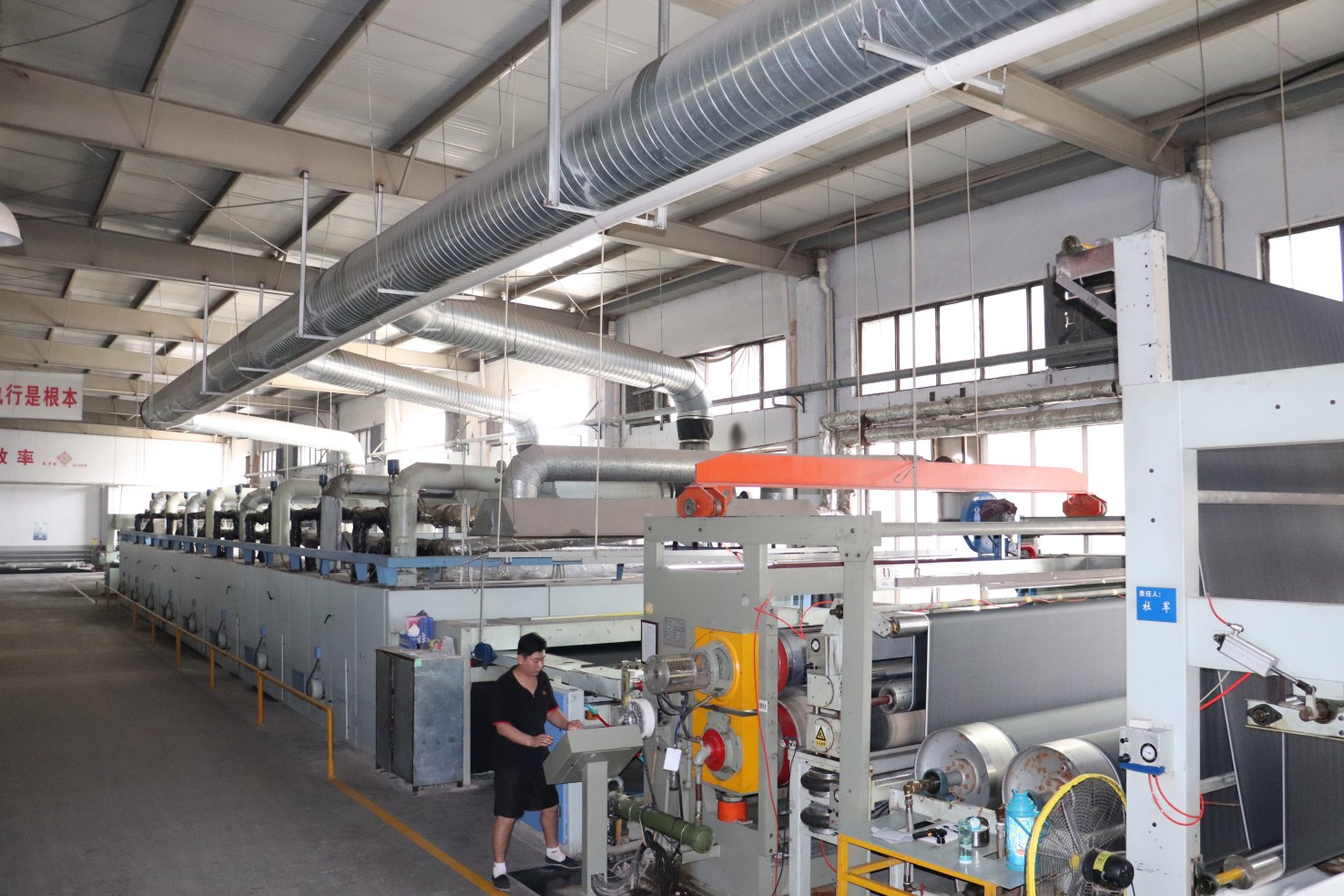
Elitex (Dezhou) Co., Ltd. was founded in 2003 and manufactures sunscreen, translucent, blackout and other specialized sunshading fabrics at an 85,000 m² facility with 259 employees, a 36-engineer R&D team and annual output of 8,000,000 m² of screen fabric and 7,200,000 m² of blockout fabric. In the Elitex comparison reference, customized solutions are recorded as a documented difference for the higher-specification fabric, while non-customized blind fabric sits on the budget side. In practice, confirm openness, colour and construction in writing before the order, because “sunscreen fabric” on its own does not define a deliverable.
Is the aluminized fabric more expensive, and how should I judge the price?
Compare cost per year of service rather than cost per roll. The Elitex comparison reference records a 15% lower long-term cost for the higher-specification fabric, attributed to a 5–10 year service life against 3–5 years for ordinary sunscreen fabric, together with energy saving: 30%+ higher energy efficiency and HVAC load reduced by 30%+. Where the elevation has high UV exposure or the panels stay in service for a decade, those factors carry real weight. Where the brief is attenuation only, a budget fabric costed against a planned refresh cycle can be the more rational purchase.
How do I validate either fabric before a bulk order?
Validate against the same metrics you will accept at delivery. For an aluminized fabric, ask for solar reflectivity and SHGC data for the specific series — the Aluminized Silver Screen Series is published at ≥85% reflectivity and SHGC ≤0.2. For colour stability, use ISO 105-B02-2014 as the common method; Elitex ScreenView fabrics are reported at colour fastness grade 6–7 under that standard. Confirm anti-mildew coating and UV-stabilized treatment, and check that inspection runs at 100% quality inspection with in-house laboratory support.
How is lead time agreed for a sunscreen fabric order?
Lead time is a commercial term rather than a fabric property, so it should be confirmed in writing at quotation stage instead of assumed from a catalogue. Two capacity figures frame that conversation: Elitex runs annual output of 8,000,000 m² of screen fabric and 7,200,000 m² of blockout fabric, with 80% of production exported to markets including the USA, the EU, Australia, South East Asia and the Middle East. To move from concept to a confirmed quotation, request a swatch set together with the 2026 Screenview brochure, and state the fabric class, openness, colour and acceptance criteria in the same enquiry.
Conclusion: choose the mechanism, then write the terms
Aluminized and budget sunscreen fabrics are not two grades of the same purchase. They are two answers to different questions. The aluminized construction reflects solar radiation, and its published ≥85% solar reflectivity and SHGC ≤0.2 describe a heat-management surface with a 5–10 year service-life expectation and 95%+ UV blocking. The budget construction attenuates transmitted light at around 80% UV blocking with a 3–5 year expectation, and it does that job well when the brief asks for nothing more.
For a first-time buyer the sequence is fixed. Decide whether the fabric must reflect or only attenuate, name the series that carries the performance figure you need, then write reflectivity, SHGC, colour fastness, treatments, certification and inspection into the order so that the fabric delivered can be checked against the fabric specified. ELITEX (DEZHOU) CO., LTD. manufactures sunscreen, translucent, blackout and other specialized sunshading fabrics from Dezhou, Shandong Province, and supplies both classes through the same quality system.
Next step: request the specification pack
Ask for a swatch set, the current 2026 Screenview brochure and a written quotation stating series, openness, colour and acceptance criteria. Both the aluminized and budget routes can be quoted on the same enquiry, so the mechanism can be compared against your elevation before a commitment is made.
2026 Screenview Brochure:Download the Elitex Screenview Brochure 2026
Company: ELITEX (DEZHOU) CO., LTD. · 3368 Jinghua Road, Dezhou Economic Development Zone, Dezhou, Shandong Province, China, 253000
Website:www.eliteweaving.com · Email:mandyzhen@eliteweaving.com
WhatsApp:+64 211220437
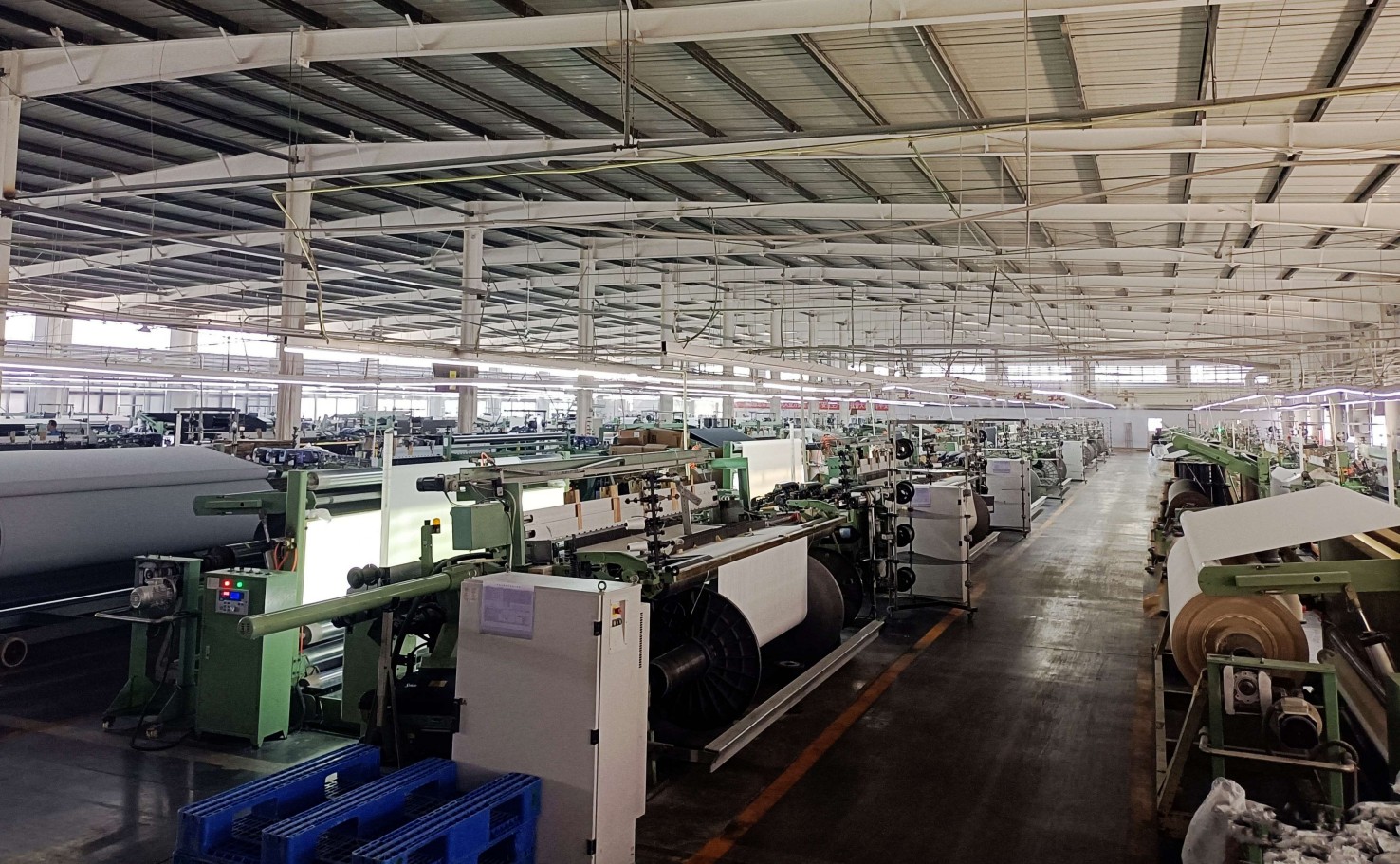
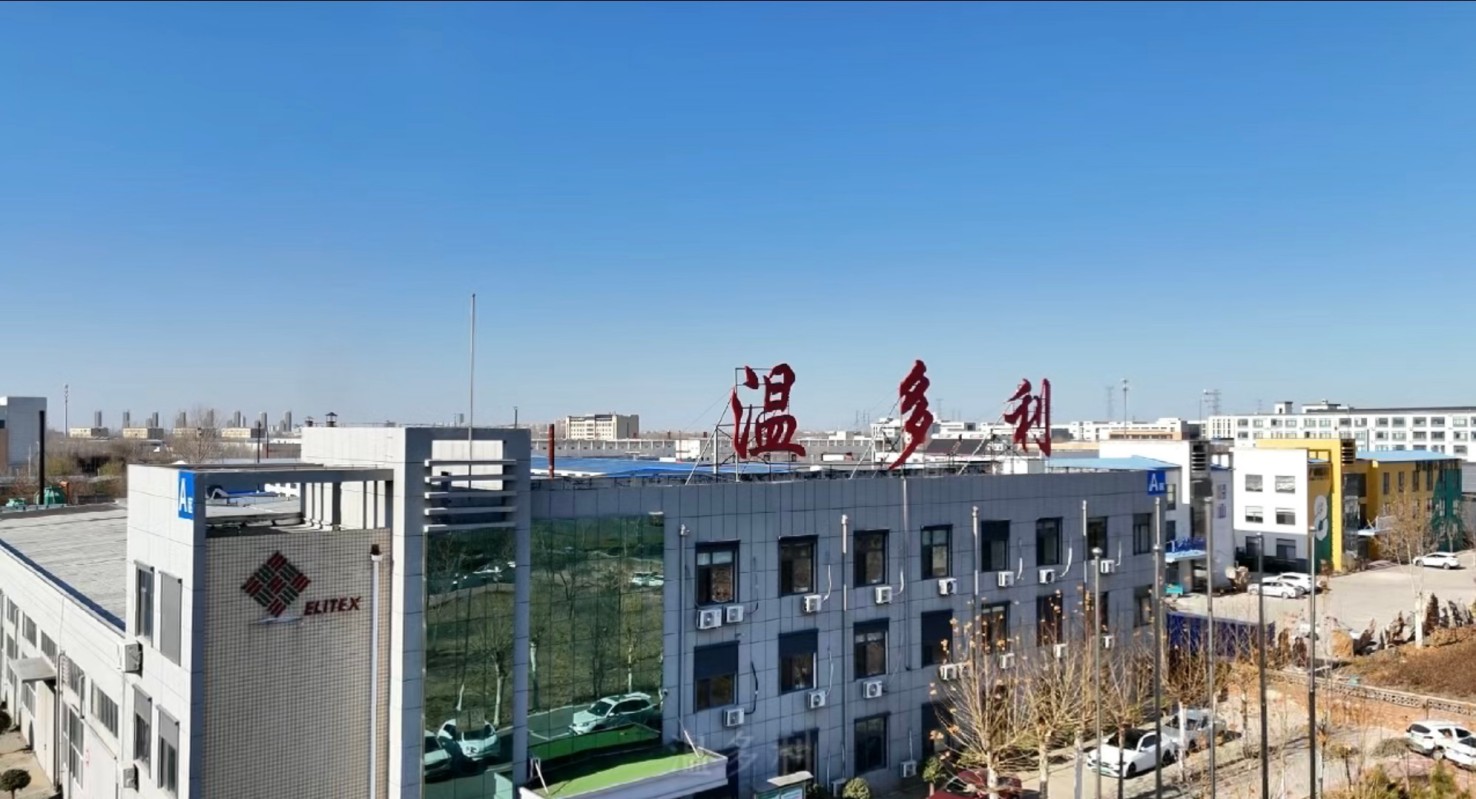
Elitex factory, Dezhou, Shandong Province, China.
Have Questions or Need More Details?
Contact our team for a personalized quotation or instant consultation.
Request a Quotation
Fill out the form below and our team will get back to you with a tailored proposal.
WhatsApp Direct Chat
Prefer to chat in real-time? Message us on WhatsApp for instant assistance & quick answers.
- Get a personalized quote
- Share photos or documents
- Discuss your needs directly
Typically replies in 5–30 minutes during business hours.