
Navigating Global Screen Fabric Compliance: Key Standards for Importers in 2026
Navigating Global Screen Fabric Compliance: Key Standards for Importers in 2026
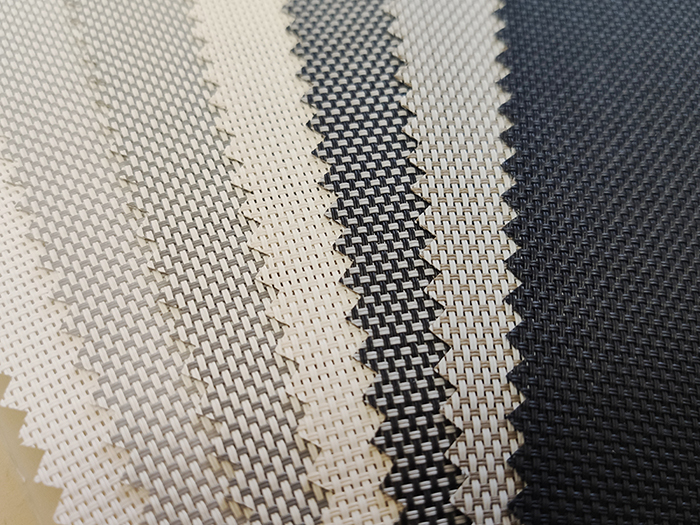
Elitex Super 6 Series — one of three distinct compliance pathways within the Elitex screen fabric range.
A screen fabric shipment is rarely rejected because the cloth itself is wrong. It is rejected because the documentation does not match the market it is entering: a fire report issued for a different colour, a datasheet that states a solar heat gain coefficient without naming the method, or a recyclability claim that cannot be traced to a specific construction.
For importers, procurement managers and specifiers buying solar shading fabrics in 2026, compliance has moved from a purchasing formality to a specification variable. This guide explains how to build a defensible compliance file for screen fabrics across EU, US, Asia-Pacific and Middle East markets, and why two products from the same manufacturer — Aluminized Sunscreen Fabric (Aluminized Silver Screen Series) and Budget Sunscreen Fabric (Elitex Super 6 Series) — require genuinely different compliance pathways.
What "Compliant" Actually Means for a Screen Fabric Order
"Compliant" is not a property of a fabric. It is a relationship between three things: one specific finished variant (construction, colour, coating, openness and width), one defined end-use market and application, and one set of documents that a third party can read without your spoken explanation. A fabric that is fully documented for an interior roller blind project in Europe may be under-documented for an exterior awning application in Australia, even when the base cloth is identical.
Three failure modes account for most compliance disputes in screen fabric importing.
Certification inheritance. The buyer accepts a certificate that names a parent company, a fibre brand or a fibre type, while the ordered construction sits outside that certificate's scope. Certificates carry scope statements for a reason.
Test-versus-certification confusion. A laboratory test result is not a classification and not a certification. A test describes what happened to one sample on one day; a classification places a product on a defined scale; a certification adds third-party verification of a material or a process. These documents answer different questions and are not interchangeable.
Datasheet gaps. Many screen fabric datasheets list the numbers buyers ask for — openness, reflectivity, solar heat gain coefficient, available widths — without stating the test basis, the variant tested, or the date. A number without a basis is a claim, not evidence.
Why Compliance Pressure on Screen Fabrics Is Rising in 2026
The commercial context explains the pressure. The global fabric solar shading systems market was valued at approximately USD 1.35 billion in 2026 and is projected to reach USD 2.14 billion by 2035, according to the Fabric Solar Shading Systems Market Report 2035 published by Reports and Data. The wider outdoor fabric market reached USD 13.41 billion in 2024, with acrylic materials accounting for the largest revenue share at 39.7%, according to Grand View Research. Both figures describe a category growing into more regulated building envelopes rather than away from them.
Material-level regulation is moving in parallel. The antimony-free polyester segment is projected to reach USD 1.07 billion by 2030, driven by EU REACH and FDA regulations limiting heavy metal migration, according to MarketsandMarkets. In practical terms, the chemistry inside the polymer is becoming a purchasing question rather than only a technical one.
Certification frameworks are also becoming more specific. Cradle to Cradle Certified® V4.0 includes a Material Health category awarded at Gold level to specialised textile fibres, confirming the absence of harmful substances in the supply chain. That matters because it allows a buyer to request material health evidence instead of a general sustainability statement.
On the European side, EN 14501:2021 is the governing standard for the thermal and visual comfort performance of solar protection devices, and it ranks products on a 0-4 scale. It illustrates the direction of travel: performance expressed as a classification against a named standard, rather than as an unlabelled figure on a PDF.
A caution about market data itself. Published estimates for adjacent categories can differ by an order of magnitude depending on how the market is defined. The global insect screen market was valued at USD 6.9 billion in 2024 by Strategic Market Research, where retractable screens represent a 34.2% type share, while Data Bridge Market Research has published an estimate of USD 789.4 million for the same year. The difference is a definition difference — mesh versus complete system. Compliance claims deserve the same discipline: a certificate is only useful when you know what it covers.
A Four-Block Compliance Documentation Model
Instead of asking a supplier for "all certificates", structure the request into four blocks. Each block answers a different risk question and can be verified independently.
Block 1 — Material Declaration
This block answers what the fabric is made of. The declaration should cover the base polymer, the coating or finish system, and the weave. Elitex Super 6 Series uses 100% polyester in basket weave or twill weave constructions. Aluminized Silver Screen Series uses polyester with an aluminised coating. Elitex Blockout Dusk Plus Series uses 100% polyester with an acrylic coating, applied either knife-coated or paste-coated.
The buyer questions that belong here: is the polymer declared as antimony-free? Is the coating chemistry declared — aluminised, acrylic or uncoated? Does the declaration name the construction actually ordered, including colour, rather than the product family?
Block 2 — Performance Evidence
This block answers what the fabric does, and against which basis. Relevant parameters for screen fabrics include openness, reflectivity, solar heat gain coefficient, available widths and dimensional stability.
Within the Elitex range, Aluminized Sunscreen Fabric offers reflectivity of ≥85% and a solar heat gain coefficient of ≤0.2, with openness of 3%-5% and widths from 2000 mm to 3000 mm. Elitex Super 6 Series offers openness options of 1%, 3%, 5% and 10% in widths of 2000 mm and 2500 mm. Blockout Dusk Plus is specified at 100% opacity with no pinhole and a dimensional stability of ±0.5%.
For European projects, request EN 14501:2021 classification values alongside the raw figures. A classification on a 0-4 scale tells a specifier where the product sits against a defined method; a raw number leaves the method unknown.
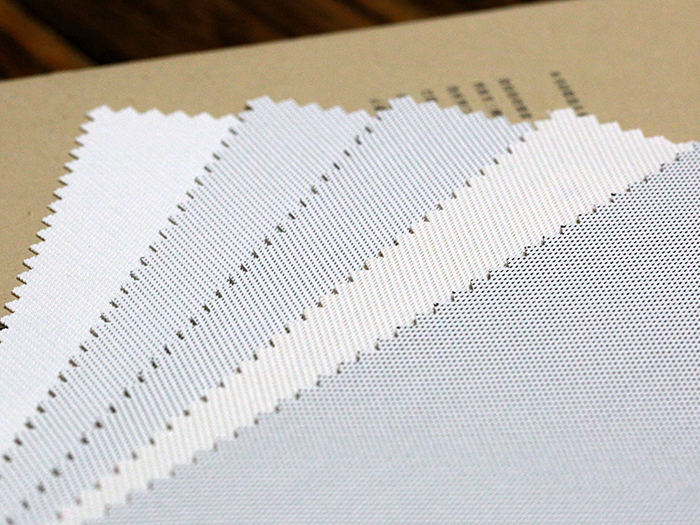
Openness level is part of the compliance scope: a document issued for one openness does not automatically cover another.
Block 3 — Fire and Safety Evidence
This block answers whether the exact construction has been tested, and by whom. Fire retardancy is a frequent special requirement in shading projects, in the same group as anti-fade and anti-mildew performance.
The discipline here is scope matching. Fire performance depends on the complete construction — polymer, coating, colour, weight and openness — so a report issued for one colour or one openness may not cover another. Request that the report reference the same variant as the purchase order, and prefer third-party laboratory testing over internal declarations. Elitex quality control includes 100% inspection and third-party lab testing, which allows test documentation to be tied to the production order rather than to a marketing sample.
Block 4 — Environmental and End-of-Life Documentation
This block answers what remains in the fabric and what happens to it after installation. Recyclable screen fabrics, antimony-free fabrics and halogen-free fabrics are increasingly named in buyer specifications, particularly where green building programmes or extended producer responsibility apply. Cradle to Cradle Certified® V4.0 provides a material health framework that buyers can point to. The scope rule applies here more than anywhere else: ask whether the certificate names the product and the manufacturing site, not only the brand.
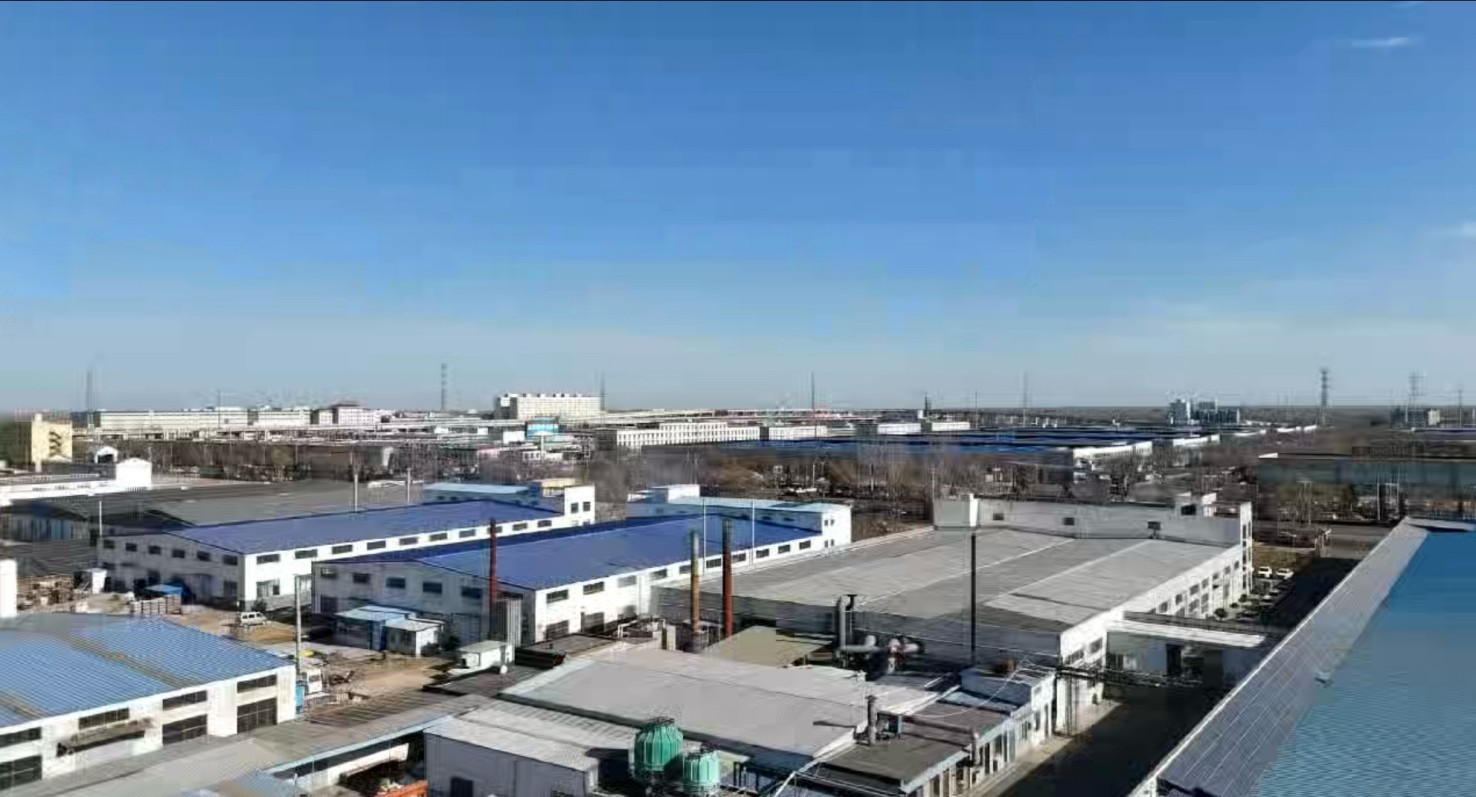
Documentation traceability begins at the plant: Elitex operates an 85,000 m² facility established in 2003.
Two Products, Two Compliance Pathways
Not every screen fabric carries the same compliance burden, even when it comes from the same factory.
Aluminized Sunscreen Fabric (Aluminized Silver Screen Series) is a high-reflective sunscreen fabric built on polyester with an aluminised coating. Its compliance profile is dominated by the coating. Reflectivity of ≥85% and a solar heat gain coefficient of ≤0.2 are performance claims that must be supported by a stated test basis, and a metallic coating raises additional questions about coating adhesion, surface composition and how reflectivity behaves across the service life of an installation. The product is positioned for commercial buildings, green buildings and high-temperature spaces — precisely the environments where specifiers ask for documentation rather than samples.
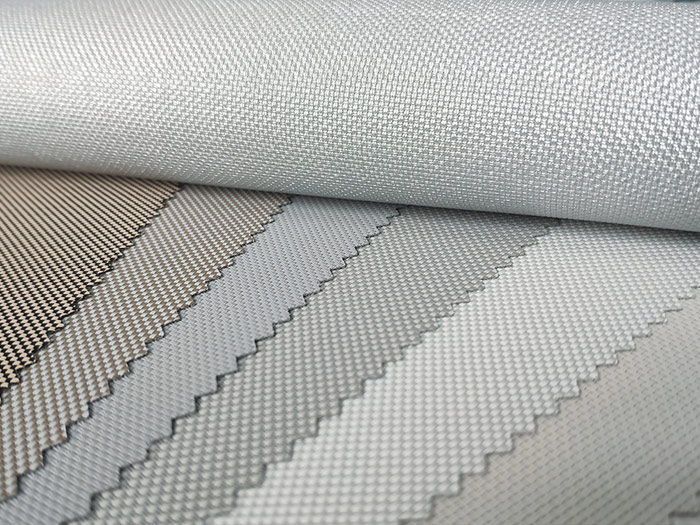
Aluminized Silver Screen Series: reflectivity ≥85% and solar heat gain coefficient ≤0.2 require a documented test basis.
Budget Sunscreen Fabric (Elitex Super 6 Series) is a 100% polyester fabric with no metallic coating, offered with openness of 1%, 3%, 5% or 10%, in widths of 2000 mm and 2500 mm, across more than 20 popular colours, for residential, commercial and hospitality applications. Its compliance profile is dominated by the polymer and the colour range: whether the base polymer is declared antimony-free, how colourants are declared across a large colour card, and how openness tolerance is documented across four openness levels. Because the product is budget-positioned, buyers should be explicit about which documents are included as standard and which are ordered separately — that is a commercial question, not a quality question.
Blockout Roller Blind Fabric (Elitex Blockout Dusk Plus Series) adds a third pathway. With 100% opacity and no pinhole, an acrylic coating, and widths from 89 mm to 3000 mm across knife-coated and paste-coated options, its evidence pack leans on coating chemistry and indoor environmental questions, which carry more weight in hospitality, office and home theatre environments.
The practical consequence is that a single compliance pack template applied to all three products will either over-document two of them or under-document the third.
Step-by-Step: Building a Compliance File for a Screen Fabric Order
- Write down the destination market and the end use. Not "EU" but "exterior roller blind, commercial office refurbishment, Germany". Not "US" but "interior roller shade, hotel guest rooms, California". End use determines which of the four blocks matters most.
- Convert the end use into a question list. A high-temperature glazed façade will weight performance evidence. A hospitality project will weight fire and indoor environmental evidence. A green building project will weight material health and recyclability.
- Request documents for the exact variant. Specify colour, openness, width and coating when requesting the datasheet and test reports. Elitex supports OEM/ODM and custom manufacturing across colour, size, openness, logo, weave pattern and coating, so the ordered variant is the correct unit of compliance.
- Verify document scope before translating anything. Check that the product name, construction, plant and date are stated. A document that cannot be matched to a purchase order line is not evidence.
- Validate with a physical sample. Compliance files describe intent; samples confirm execution. Confirm minimum order quantity and lead time at the same time, so that sampling and production planning are not sequential surprises.
- Put documentation into the purchase contract. State which documents ship with the goods, in which language, and who bears the cost if a re-test is required. This converts a compliance file into a contractual obligation.
- Re-verify on a schedule. Coatings, colour chemistries and regional requirements change. Treat the compliance file as a versioned document with a review date rather than a one-off deliverable.
Use Cases: Matching Evidence to End-Use Markets
European commercial building façades. A specifier working on a glazed commercial building in a green building programme will look for thermal performance expressed against a recognised classification framework such as EN 14501:2021, plus reflectivity and solar heat gain values for high-temperature spaces. Aluminized Sunscreen Fabric, with reflectivity of ≥85% and a solar heat gain coefficient of ≤0.2, is the relevant product family for that application. Elitex has supplied architectural design firms, commercial building developers, hotel chains, residential contractors and blind manufacturers across projects in Germany and Australia, covering more than 10,000 meters and 50+ projects, with reported results including 30%+ energy saving, 95% UV blocking and service durations of 5-10 years.
Australian hotel and residential projects. Hospitality and residential shading in Australia combines sustained UV exposure with an expectation of long colour retention. In this setting the compliance conversation usually pairs UV and durability evidence with fire documentation for the exact construction. The Elitex project record highlights customised solutions, long durability, fire retardant performance and eco-friendly material as project attributes.
Middle East high-temperature applications. Reflective performance dominates here. Buyers should request the reflectivity test basis and the solar heat gain coefficient for the exact coated variant, because those are the numbers that determine whether the shading strategy performs in a high-temperature space.
Cost-driven US and Southeast Asian projects. Where the driver is volume and cost rather than premium performance, the Elitex Super 6 Series pathway applies: 100% polyester, four openness options, more than 20 colours, and a document scope agreed at quotation. Elitex exports to the USA, EU, Australia, North America, South East Asia and the Middle East, with approximately 80% of output going to export markets.
Comparison Table 1: Regional Compliance Expectation Map
| Compliance dimension | EU market | US market | Asia-Pacific / Middle East |
|---|---|---|---|
| Thermal and visual performance | EN 14501:2021 is the governing standard for thermal and visual comfort performance of solar protection devices, ranking products on a 0-4 scale — request class values, not raw numbers alone. | Request measured solar heat gain coefficient and reflectance values with a stated test basis for the exact variant. | Request performance values together with the test basis; verification expectations vary by buyer programme. |
| Restricted substances and heavy metals | EU REACH is cited as a driver of antimony-free polyester adoption, reflecting limits on heavy metal migration. | FDA regulations limiting heavy metal migration are cited as a market driver for antimony-free material. | Specifications often reference EU or US buyer requirements; confirm which framework the buyer's programme follows. |
| Material health and recyclability | Cradle to Cradle Certified® V4.0 provides a Material Health framework buyers can request; confirm the product scope named on the certificate. | Recyclable and halogen-free declarations are commonly requested within buyer specifications. | Verify per programme; recyclability claims should name the specific construction. |
| Fire performance documentation | Match the report to the ordered construction — polymer, coating, colour and openness. Prefer third-party laboratory testing over internal declarations, and confirm that the report references the same variant as the purchase order. | ||
| Unit of verification | The datasheet and test report for the ordered variant — not the product family, and not the parent company. | ||
This table summarises the compliance questions importers should ask in each market; it is not legal advice. The buyer's own specification and the end-use application always govern.
Comparison Table 2: Product Compliance Pathways in the Elitex Range
| Attribute | Aluminized Silver Screen Series | Elitex Super 6 Series | Elitex Blockout Dusk Plus Series |
|---|---|---|---|
| Product type | High reflective sunscreen fabric | Budget sunscreen fabric | 100% blockout fabric |
| Material | Polyester with aluminised coating | 100% Polyester | 100% Polyester with acrylic coating |
| Openness | 3%-5% | 1%, 3%, 5%, 10% | 100% opacity, no pinhole |
| Width | 2000 mm - 3000 mm | 2000 mm, 2500 mm | 89 mm, 100 mm, 127 mm, 2000 mm, 2500 mm, 3000 mm |
| Key performance value | Reflectivity ≥85%; solar heat gain coefficient ≤0.2 | Basket weave or twill weave; 20+ popular colours | Dimension stability ±0.5%; knife-coated or paste-coated |
| Primary compliance focus | Coating-related evidence: reflectivity test basis, surface composition, coating durability | Polymer and colourant declaration across the colour range; openness tolerance | Coating chemistry and indoor environmental performance |
| Typical applications | Commercial building, green building, high-temperature space | Residential, commercial, hospitality | Home theatre, bedroom, office, hospitality |
FAQ: Screen Fabric Compliance Questions Importers Ask
What documents should an importer request to prove screen fabric compliance?
Request four blocks: a material declaration, performance evidence, fire and safety evidence, and environmental or end-of-life documentation. Each document should name the exact variant — construction, colour, openness, width and coating — and state the test basis and date. Elitex quality control includes 100% inspection and third-party lab testing, so documentation can be requested against the production order rather than a generic sample.
Can screen fabric be customised to meet a project's compliance requirements?
Customisation changes the tested construction, so it changes the compliance scope. Elitex operates OEM/ODM and custom manufacturing across colour, size, openness, logo, weave pattern and coating, with a monthly capacity of 500,000 meters. The practical rule: any change to colour, coating or openness should trigger a scope check on existing documents. If the change moves outside the tested variant, re-testing becomes a buyer decision point rather than an assumption.
Does a budget screen fabric need a different compliance file?
The market and application set the compliance requirement, not the price tier; what changes is which documents are included by default. Elitex Super 6 Series, a budget sunscreen fabric in 100% polyester with openness of 1%, 3%, 5% and 10% across more than 20 colours, has a compliance focus on polymer declaration and colourant scope. A coated reflective product such as Aluminized Silver Screen Series adds coating-related evidence on top. Agree the document scope in writing at quotation so the optional cost is visible before the order.
How can an importer validate compliance before committing to a bulk order?
Validate in two layers. First, check that the datasheet and test reports match the intended variant and market. Second, confirm that the physical sample matches the ordered construction. Elitex sets a minimum order quantity of 500 meters and a lead time of 15-30 days, which allows sample validation and production planning to run against the same timeline rather than sequentially.
What is the typical lead time for a compliant screen fabric order?
Elitex quotes a lead time of 15-30 days and a minimum order quantity of 500 meters, with 24/7 online support and technical guidance through the order. Because documentation requests add steps, the practical recommendation is to open the compliance file at the sample stage rather than after the order is placed. Importers who want to review the specification range before requesting documents can download the Elitex Screenview Brochure 2026, or send the intended end-use market and variant to the Elitex team for a document list matched to that market.
Conclusion: Treat Compliance as Scope, Not as Paperwork
Compliance failures in screen fabrics are scope failures. The base cloth is usually fine; the documentation is what does not match. Four practices reduce the risk materially. Define the destination market and end use in writing before the first document is requested. Structure every request into material, performance, fire and environmental blocks. Insist that every document names the ordered variant. And treat products differently: an aluminised reflective fabric such as Aluminized Silver Screen Series is a coating-driven evidence file, a budget 100% polyester fabric such as Elitex Super 6 Series is a polymer-and-colourant evidence file, and a blockout construction such as Elitex Blockout Dusk Plus Series is a coating-chemistry file.
Elitex (Dezhou) Co., Ltd. manufactures across a range of sunscreen, translucent and blackout sunshading fabrics from an 85,000 m² facility established in 2003, with 259 employees, 36 R&D engineers and annual output of 8,000,000 m² of screen fabrics and 7,200,000 m² of blockout fabrics. Buyers who want documentation matched to a specific end-use market can start from the product and specification range and then request the corresponding compliance blocks.
Next step: match your end-use market to a document list
Download the Elitex Screenview Brochure 2026 for the full product and specification range, or send your destination market, application and preferred variant to the Elitex team and request the corresponding compliance documentation set.
Download the Elitex Screenview Brochure 2026
Website: www.eliteweaving.com | Email: mandyzhen@eliteweaving.com | Tel: +86-534-2752986 | WhatsApp: +64 211220437
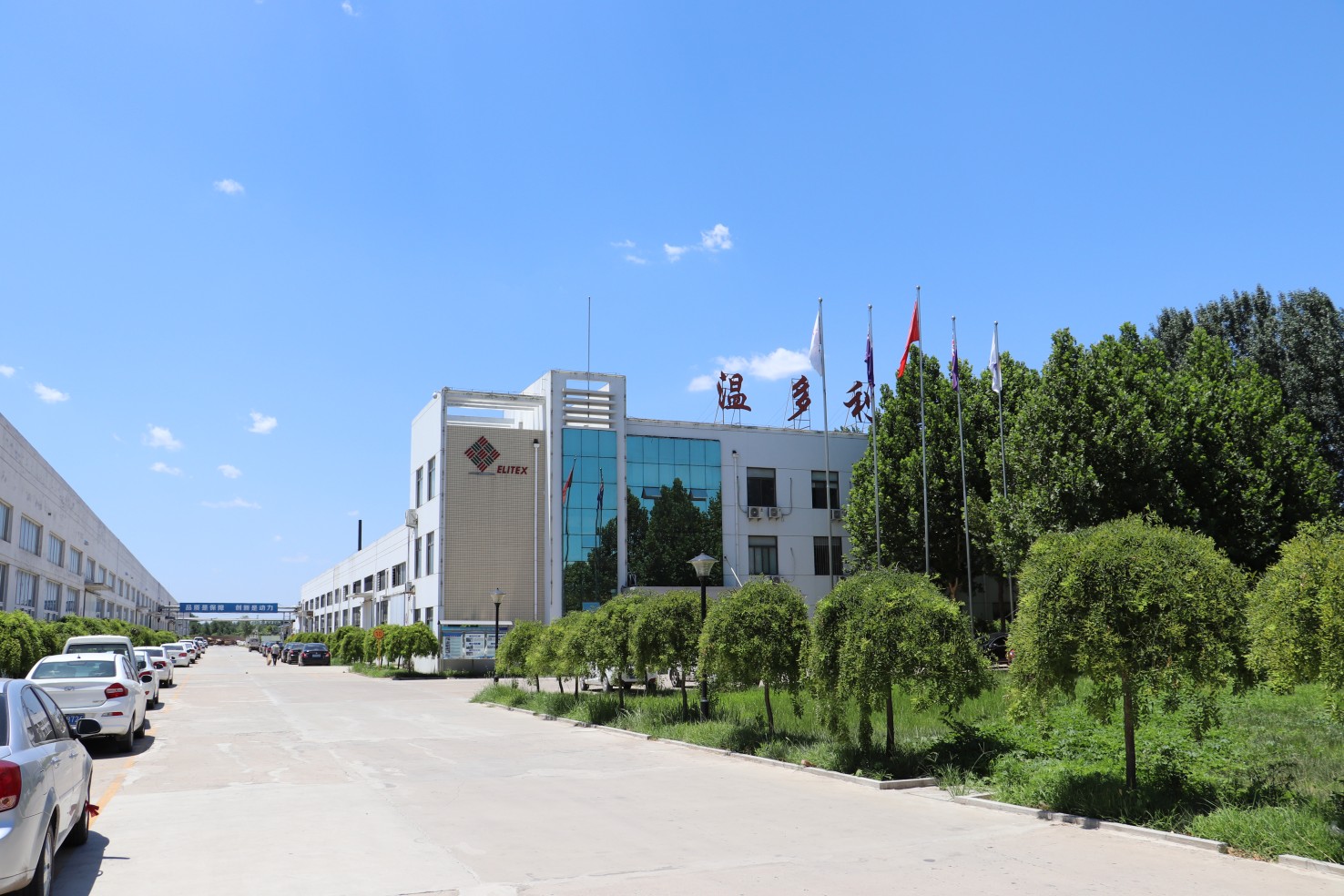
Elitex supports compliance documentation requests with 100% inspection and third-party lab testing tied to the production order.
Have Questions or Need More Details?
Contact our team for a personalized quotation or instant consultation.
Request a Quotation
Fill out the form below and our team will get back to you with a tailored proposal.
WhatsApp Direct Chat
Prefer to chat in real-time? Message us on WhatsApp for instant assistance & quick answers.
- Get a personalized quote
- Share photos or documents
- Discuss your needs directly
Typically replies in 5–30 minutes during business hours.