Blockout fabrics are coated textiles engineered to block light transmission in roller blinds, vertical blinds, roman blinds, and other window coverings. Elitex (Dezhou) Co., Ltd. is an international company specializing in the manufacture of fabrics for the international blind and awning industry, producing blockout, sunscreen, translucent, and cross stitch fabrics since 2003 from its facility at 3368 Jinghua Road, Dezhou Economic Development Zone, Shandong, China. For procurement professionals, the core challenge is not finding blockout fabric suppliers — it is interpreting technical parameters correctly and verifying that production processes will deliver consistent quality at production scale.

The Procurement Problem: Datasheets vs. Real-World Performance
A typical blockout fabric datasheet lists opacity, coating adhesion, dimension stability, flatness, color fastness, and fire-retardant compliance. In practice, however, these parameters are not always understood by buyers when they matter most:
- A fabric that blocks light in a sample book can develop pinholes after slitting, sewing, or shipping under tension.
- A coating that looks uniform at first inspection can delaminate after repeated rolling inside a roller blind mechanism.
- A fabric that passes one region's fire-retardant test can fail another because national standards measure different behaviors.
The root cause is usually process-related. Base fabric construction, yarn quality, coating polymer selection, coating weight, drying and curing conditions, and the coating line itself all determine whether a blockout fabric performs as specified. Buyers who understand these process-to-parameter links can evaluate suppliers far more accurately.
Blockout Fabrics in the Blind and Awning Industry
Blockout fabrics are part of a broader family of shading fabrics that also includes translucent fabrics, dimout fabrics, light filter fabrics, and sunscreen fabrics. They are converted into roller fabrics, vertical blinds fabrics, roman blinds fabrics, and blockout jacquard fabrics for decorative and functional window coverings.
Elitex's blockout range is described by the company as offering good flatness, full-blockout opacity without pinholes, strong coating adhesion, and dimension stability. The fabrics are 100% polyester with acrylic coating in a PVC-free formulation, according to the company's product specifications. They are available in Non-FR and FR versions, giving blind manufacturers flexibility across markets with different fire-safety regulations.
Key Technical Parameters Explained
1. Full Blockout Without Pinholes
A blockout fabric reaches full blockout only when no light passes through the coated surface, including when the fabric is under tension. Pinholes are tiny uncoated spots that appear as points of light and are typically caused by inconsistent coating application, contaminants, or low coating weight. Elitex specifies its blockout fabrics as full-blockout without pinhole, a characteristic that depends on the uniformity of the coating line and the quality of the coating polymer.
2. Coating Adhesion and Delamination Resistance
Coating adhesion is the bond strength between the polymer coating and the base fabric. If adhesion is weak, the coating can separate from the fabric — a defect known as delamination — during fabrication or in use. Elitex states that its blockout fabrics use top quality polymer with no delamination and good penetration, meaning the coating anchors into the fabric structure rather than sitting only on the surface. Good penetration is a direct result of coating formulation and curing parameters.
3. Dimension Stability
Dimension stability means the fabric maintains consistent width and length through cutting, sewing, and long-term use. For vertical blinds, poor dimension stability causes uneven hem lines; for roller blinds, it causes tracking and shading gaps. Elitex lists dimension stability as an explicit characteristic of its blockout fabrics, supported by fabric construction and controlled finishing processes.
4. Flatness
Flatness refers to the fabric's ability to hang without ripples, curling, or edge distortion. Good flatness is essential for large roller blinds and vertical blinds where surface appearance is highly visible. Elitex identifies good flatness as a core advantage of its shading fabrics, including its blockout range.
5. Fabric Strength and Durability
Strength and durability determine how well a blockout fabric survives repeated raising and lowering, cleaning, and long installation life. Elitex uses top quality yarn to achieve fabric strength and durability. Yarn quality, weave density, and coating flexibility all contribute to a fabric's resistance to tearing and edge fraying.
6. Color Fastness
Color fastness measures how well the fabric color resists fading under light exposure. Elitex blockout fabrics achieve color fastness of Grade 6-7 according to the ISO 105-B02-2014 Xenon Arc Lamp test method. This grade indicates strong resistance to light-induced fading, which is particularly important for commercial and hospitality projects with large window areas and long-term installations.
7. Fire Retardancy and Compliance Standards
Fire-retardant (FR) performance is a mandatory requirement in many markets, and the test methods differ by region. Elitex blockout fabrics are available in Non-FR and FR versions, and the FR range complies with the following standards, as stated by the company:
- German B1
- California U.S. Title 19 (Small Scale)
- NFPA 701-2015 Method 1
- EN 13773:2003 Class 1
- BS5867-2 Type B
- China B1
- AS1530-2 and AS1530-3
These standards cover flame spread, ignition resistance, and burning behavior used in Europe, North America, Australia, and China. Buyers should verify that the fabric they specify meets the exact standard required in their destination market, since one FR test does not automatically transfer across all jurisdictions.
8. Environmental and Indoor Air Quality Certifications
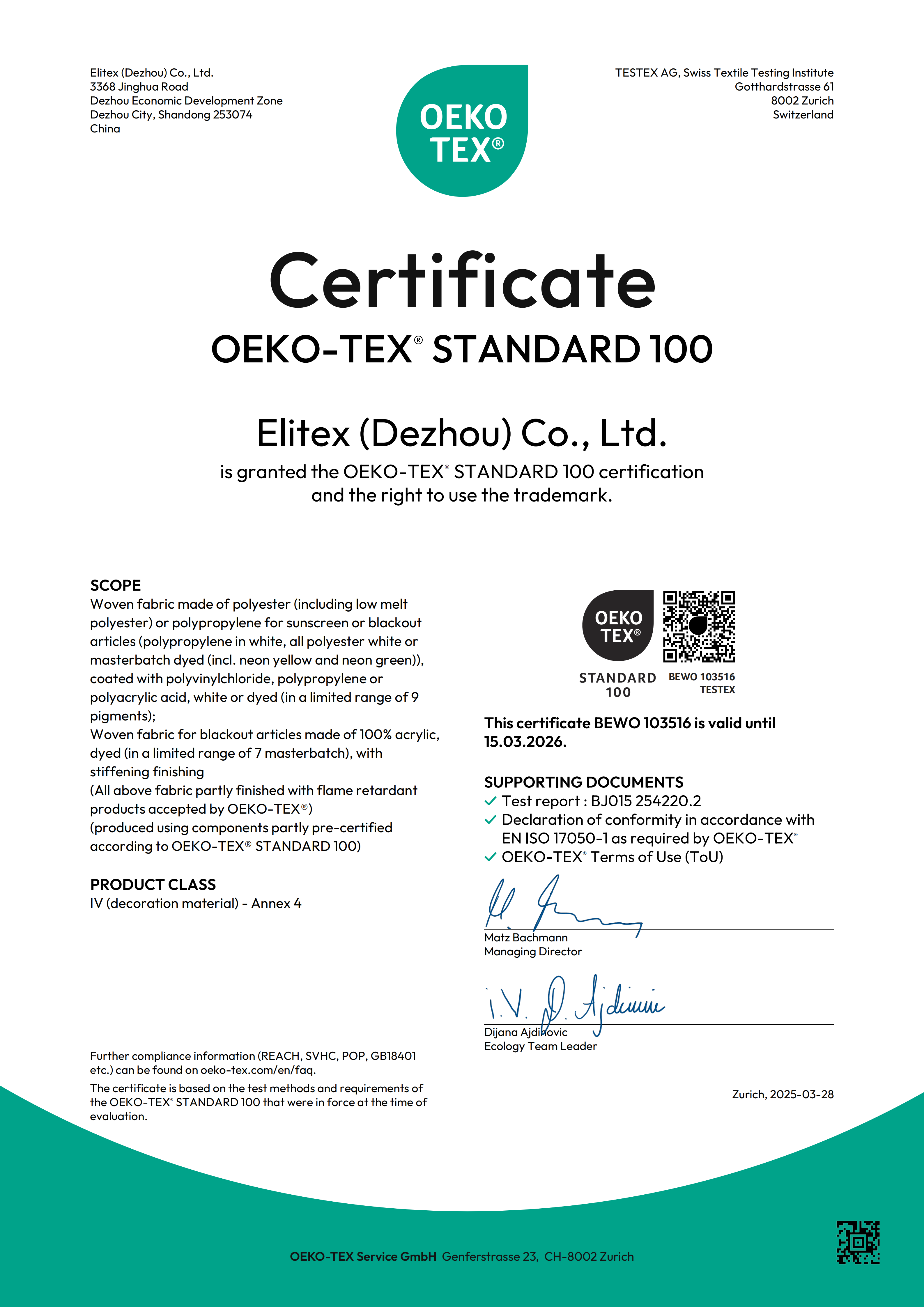
Beyond performance, blockout fabrics are increasingly required to meet indoor air quality and chemical safety requirements. Elitex blockout fabrics are GREENGUARD GOLD Certified, GREENGUARD Certified, and Oeko-Tex Standard 100 Certified. The company's production and quality control processes also operate under ISO 9001:2015, ISO 14001:2015, and ISO 45001:2018 management system certifications, and the company holds Cradle to Cradle certification. For buyers supplying schools, healthcare facilities, and green building projects, these certifications support LEED and similar compliance documentation.
How Production Processes Affect Blockout Fabric Quality
Yarn Selection and Fabric Construction
The base fabric determines the blockout fabric's strength, flatness, and how well the coating penetrates and anchors. Elitex states that it uses top quality yarn to achieve fabric strength and durability. A dense, well-constructed base fabric provides a more stable substrate for coating and reduces the risk of pinholes that form where yarns shift or gaps open during coating.
Coating Formulation: PVC-Free Acrylic
Elitex blockout fabrics are 100% polyester with acrylic coating in a PVC-free formulation. Polymer quality matters because the coating must block light, remain flexible enough for rolling, bond firmly to the fabric, and hold its properties over years of use. Elitex states that it uses top quality polymer with no delamination and good penetration.
Coating Methods: Knife, Paste, and Foam Coating
The coating method determines the coating structure, handfeel, coverage, and adhesion characteristics. Three methods are widely used in the industry:
- Knife-coated fabrics: a blade meters the coating compound onto the moving fabric. This method allows controlled coating weight and is generally associated with a firmer surface.
- Paste coated fabrics: a paste-form acrylic compound is applied to the fabric. Paste coating is generally associated with a soft, full handfeel and dense coverage.
- Foam coated fabrics: the coating is applied in foam form. Foam coating can produce a soft handfeel while achieving good coverage, and it is also used in sunscreen fabric applications.
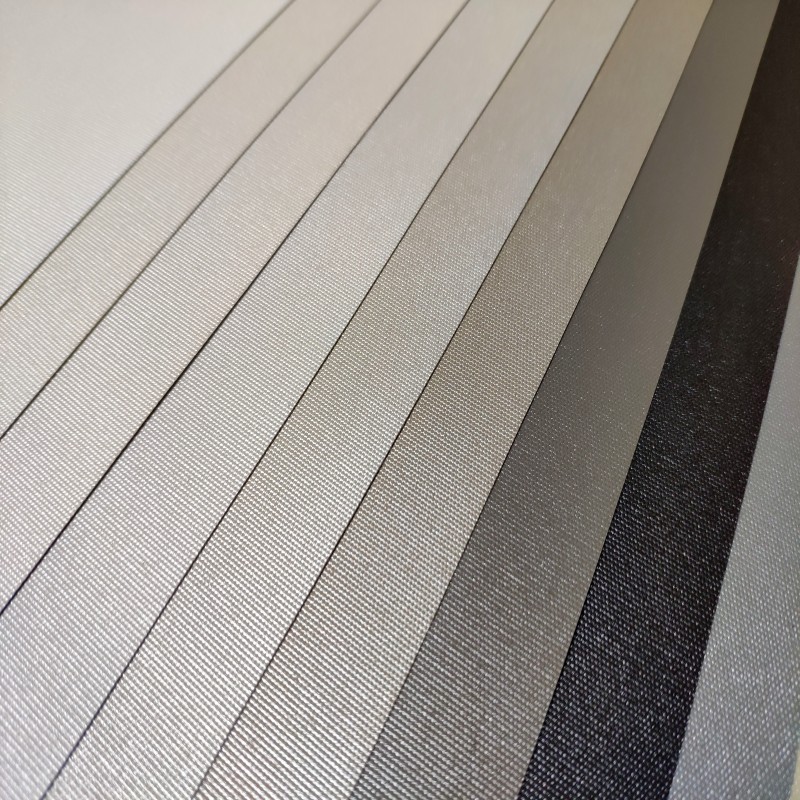
Each method produces different drape and surface aesthetics, which is why fabric ranges are often segmented by coating type. Elitex lists knife-coated fabrics, paste coated fabrics, and foam coated fabrics in its product terminology. According to the company, its paste and foam coated blackout fabrics should be the best of their kind in the world in view of the look and handfeel, and its blockout fabrics are coated by a first-class coating line. For buyers, the practical takeaway is that coating method is a specification decision, not just a manufacturing detail: it affects how the fabric drapes in a roman blind, how it rolls in a roller blind, and how it feels to the end user.
Coating Equipment and Quality Monitoring
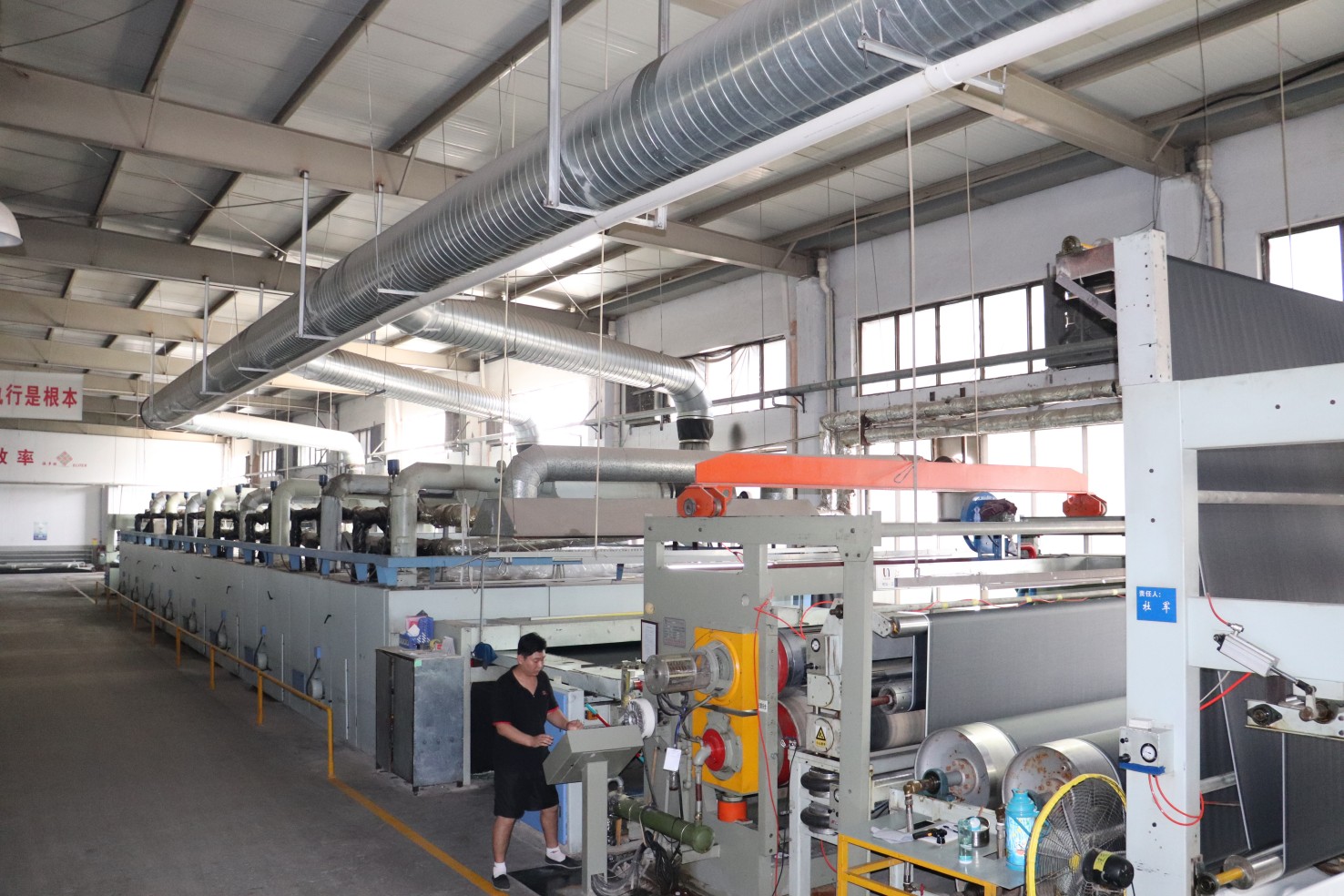
Coating uniformity is difficult to achieve without precise equipment. Elitex states that its blockout fabrics are coated by a first-class coating line in the world. The company also researches and develops its products with its own equipment and testing devices, including purpose-built laboratories that constantly monitor and review the quality of all its products. Purpose-built quality labs matter because blockout defects such as pinholes, coating streaks, and adhesion failure are best caught at production stage rather than after shipment.
Step-by-Step: How to Evaluate a Blockout Fabric Supplier
- Verify the opacity claim. Place a sample over a strong light source, then repeat under tension. Full blockout without pinhole should hold in both conditions.
- Test coating adhesion. Fold and crease the fabric, then check whether the coating cracks or separates. Delamination should not occur.
- Check dimension stability. Measure width and length before and after cutting, and compare against the supplier's stated specification.
- Confirm color fastness. Ask for the test report. Elitex blockout fabrics are rated Grade 6-7 under ISO 105-B02-2014 Xenon Arc Lamp testing.
- Map FR compliance to your market. Confirm that the fabric version (Non-FR or FR) matches the standard required in the destination country.
- Review green certifications. GREENGUARD GOLD, GREENGUARD, and Oeko-Tex Standard 100 certifications support indoor air quality requirements.
- Assess quality infrastructure. Look for management system certifications such as ISO 9001:2015, ISO 14001:2015, and ISO 45001:2018, and ask whether the manufacturer runs its own purpose-built laboratories.
- Confirm warranty coverage. Elitex provides a 5-year warranty on its products, which indicates confidence in long-term performance.
Use Cases: Residential, Commercial, and Industrial
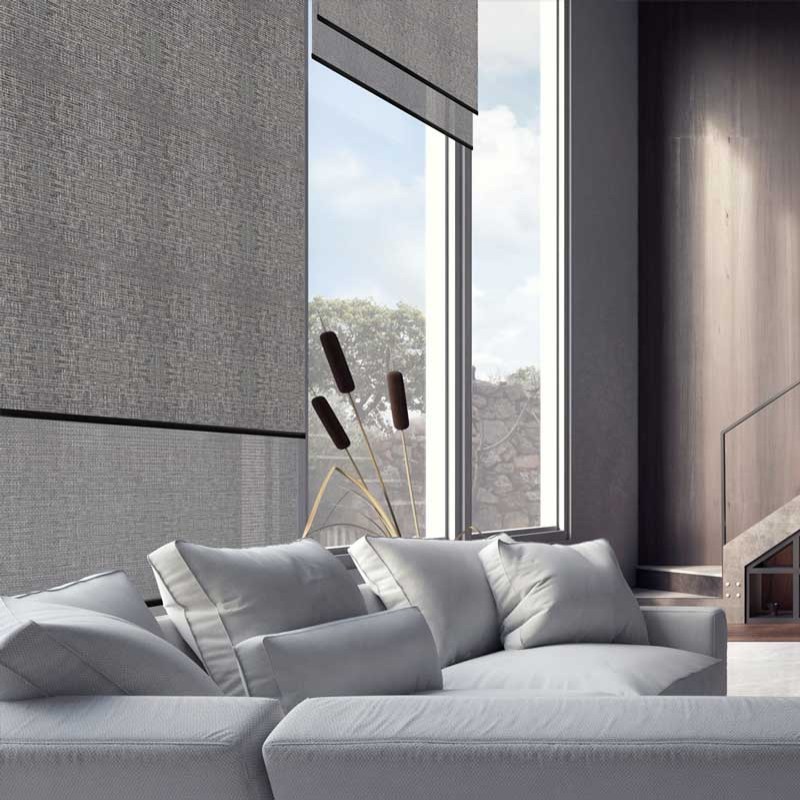
Blockout fabrics are used in residential, commercial, and industrial settings to meet functional needs for sun shading, energy saving, and environmental protection.
- Residential: roller blinds and roman blinds for bedrooms and media rooms where full light blockage improves sleep and viewing conditions.
- Commercial: vertical blinds and roller blinds in offices, hotels, and meeting rooms where flatness, dimension stability, and FR compliance are priorities.
- Industrial and contract: large-scale sunshading and blackout installations where durability, color fastness, and certified performance documentation are required.
Elitex's partner base includes companies active in the global window coverings supply chain, including SPRINGS WINDOW FASHIONS LLC, MECHOSYSTEMS INC, MERMET, HUNTER DOUGLAS, ROLLEASE INC, SUNSETTER, COULISSE, BANDALUX, UNILINE, FARZ, LOUVER-LITE, GLOBAL, and ZMC, according to the company. This partner network indicates that Elitex blockout fabrics are specified and converted by established players in the blind and awning industry.
Knife-Coated vs. Paste-Coated vs. Foam-Coated Blockout Fabrics
The table below summarizes the general characteristics of the three coating methods as they are broadly understood in the industry. Elitex's own position is noted separately.
| Characteristic | Knife-Coated | Paste-Coated | Foam-Coated |
|---|---|---|---|
| Application method | Blade meters coating onto the fabric surface | Paste-form compound applied in a controlled layer | Coating applied in foam form |
| Typical handfeel | Generally firmer surface | Soft, full handfeel | Soft handfeel possible |
| Opacity coverage | Even coating weight | Dense coverage suited to full blockout | Coverage depends on foam formulation |
| Adhesion behavior | Depends on polymer penetration | Low delamination when polymer penetrates well | Depends on formulation and curing |
| Common applications | Roller fabrics, dimout fabrics | Blockout fabrics for roman and roller blinds | Sunscreen fabrics and blockout fabrics |
According to Elitex, its paste and foam coated blackout fabrics should be the best of their kind in the world in view of the look and handfeel. Buyers should evaluate handfeel against their own product positioning, because a fabric's drape and touch are decisive for residential and hospitality programs.
Frequently Asked Questions
What fire-retardant standards and certifications do Elitex blockout fabrics meet?
Elitex blockout fabrics are available in Non-FR and FR versions. The FR versions comply with German B1, California U.S. Title 19 (Small Scale), NFPA 701-2015 Method 1, EN 13773:2003 Class 1, BS5867-2 Type B, China B1, AS1530-2, and AS1530-3. The fabrics are also GREENGUARD GOLD Certified, GREENGUARD Certified, and Oeko-Tex Standard 100 Certified. In addition, Elitex operates under ISO 9001:2015, ISO 14001:2015, and ISO 45001:2018 certifications and holds Cradle to Cradle certification, according to the company's published certificates.
What does "full blockout without pinhole" actually mean?
Full blockout means the fabric blocks all visible light when viewed against a light source. "Without pinhole" means there are no tiny uncoated spots that allow points of light through. Elitex specifies its blockout fabrics as full-blockout without pinhole, achieved with a 100% polyester base fabric and acrylic coating in a PVC-free formulation, applied on a first-class coating line.
How do paste, foam, and knife coating processes affect blockout fabric quality?
Coating method influences handfeel, coverage, and adhesion. Knife coating meters an even coating layer with a blade and is generally associated with a firmer surface. Paste coating uses a paste-form acrylic compound and is generally associated with a soft, full handfeel and dense coverage. Foam coating applies the coating in foam form and can combine softness with good coverage. Elitex states that its paste and foam coated blackout fabrics should be the best of their kind in the world in view of the look and handfeel.
What color fastness performance can buyers expect from Elitex blockout fabrics?
Elitex blockout fabrics demonstrate color fastness of Grade 6-7 under the ISO 105-B02-2014 Xenon Arc Lamp test method. This level of performance supports use in commercial and hospitality projects where large glazed areas expose fabrics to prolonged light.
What warranty does Elitex provide on its blockout fabrics?
Elitex provides a 5-year warranty on its products. Its quality monitoring is supported by purpose-built laboratories with testing devices that constantly monitor and review the quality of all its products, according to the company. Buyers should confirm warranty terms and conditions directly with the supplier when placing orders.
How can I request blockout fabric samples or a quote from Elitex?
For a quotation, samples, or to discuss which coating type and FR version suits your market, contact Elitex (Dezhou) Co., Ltd. at www.eliteweaving.com, by email at georgezhao@eliteweaving.com or mandyzhen@eliteweaving.com, by phone at +86-15865348778, or via WhatsApp at +64-211220437. Elitex is located at 3368 Jinghua Road, Dezhou Economic Development Zone, Shandong, China.
Conclusion
Blockout fabric performance is determined long before the finished roll reaches a blind manufacturer: it is determined by yarn quality, coating formulation, coating method, and the precision of the coating line. For buyers, the most reliable approach is to treat technical parameters as verification points rather than marketing language. Check full blockout without pinhole, coating adhesion, dimension stability, flatness, color fastness, and the right FR standard for your market. Then verify the supplier's quality infrastructure, certifications, and warranty. Elitex (Dezhou) Co., Ltd. publishes its technical characteristics, certifications, and a 5-year warranty on its products, and its specialists are available to match a blockout fabric to your specific blind program.
Request a sample or quotation
Elitex (Dezhou) Co., Ltd. — Blockout, sunscreen, translucent, and cross stitch fabrics for the international blind and awning industry.
Email: georgezhao@eliteweaving.com | mandyzhen@eliteweaving.com
Tel: +86-15865348778 | WhatsApp: +64-211220437
Website: www.eliteweaving.com
Address: 3368 Jinghua Road, Dezhou Economic Development Zone, Shandong, China