For procurement professionals in the window covering and awning industry, selecting the right fabric supplier is a critical decision that impacts product quality, supply chain stability, and brand reputation. The market for specialized fabrics like blockout fabrics, light filter fabrics, and translucent fabrics is vast and varied. This guide provides a structured framework to help buyers efficiently identify and evaluate premium suppliers, ensuring you partner with manufacturers that meet your technical, commercial, and ethical standards.
1. Define Your Technical and Functional Requirements
Begin by clearly outlining the specific needs of your end product. This will narrow down your search to suppliers with the relevant expertise.
- Opacity Level: Do you require 100% light-blocking blockout fabrics for bedrooms, or light-diffusing translucent fabrics for living spaces? Consider dimout fabrics for intermediate needs.
- Application & Fabric Type: Specify if the fabric is for roller blinds fabrics, vertical blinds fabrics, Roman Blinds fabrics, or outdoor shading. Specialized weaves like Blockout Jacquard fabrics or Translucent Jacquard fabrics require specific looms.
- Coating Technology: Understand the differences. Knife-coated fabrics and paste coated fabrics are common for blackout. Advanced solutions like 100% Polyester with acrylic coating fabrics in Pvc free or blockout fabrics with metallic backing offer enhanced environmental and performance benefits.
- Performance Certifications: List mandatory certifications for your target markets: flame retardancy (e.g., FR German B1, California Title 19), color fastness (e.g., Grade 6-7 to ISO 105-B02), and environmental/safety standards (e.g., Oeko-Tex Standard 100, GREENGUARD GOLD).
- Durability & Aesthetics: For Sunshading blinds fabrics or Decorative fabrics, consider factors like UV resistance, dimensional stability, soil repellency, and handfeel.
2. Evaluate Manufacturing Capability and Quality Control
A supplier's infrastructure directly correlates with product consistency and innovation capacity.
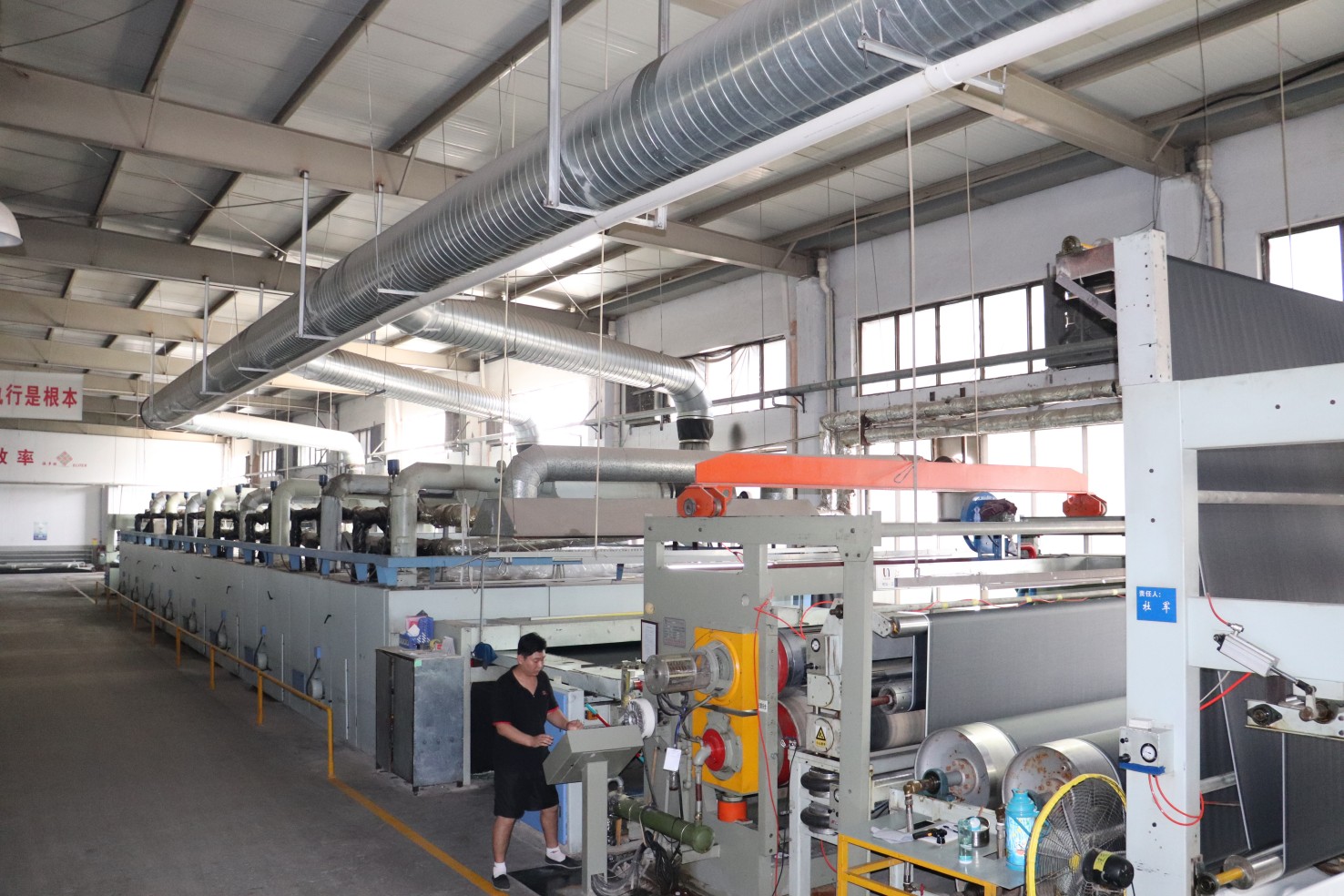
- Vertical Integration: Suppliers with in-house weaving, coating (e.g., owning a world-class coating line), and finishing control more variables, ensuring better coating adhesion and no delamination.
- R&D Investment: Look for dedicated laboratories for testing opacity fabrics, strength, and weather resistance. This is crucial for developing Foam coated Sunscreen fabrics or Water and Soil repellent Upholstery dobby fabrics.
- Quality Assurance Systems: Certifications like ISO 9001:2015 for quality management and ISO 14001:2015 for environmental management are baseline indicators of a systematic approach.
- Production Scale & Flexibility: Can they handle large, consistent orders while also offering customized solutions for sunshading fabrics?
3. Assess Sustainability and Compliance Credentials
Environmental and health compliance is no longer a niche demand but a market expectation.
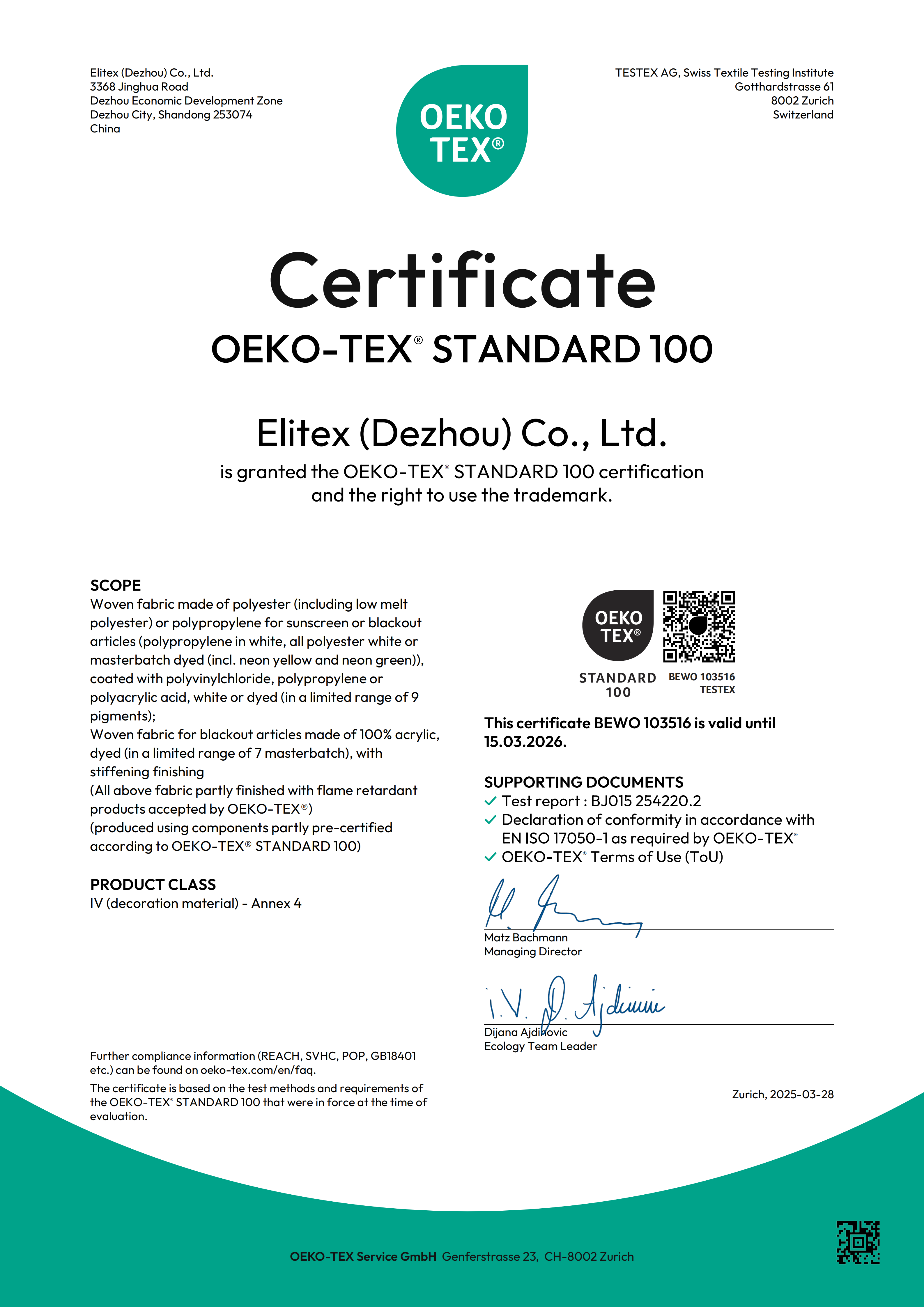 OEKO-TEX® STANDARD 100
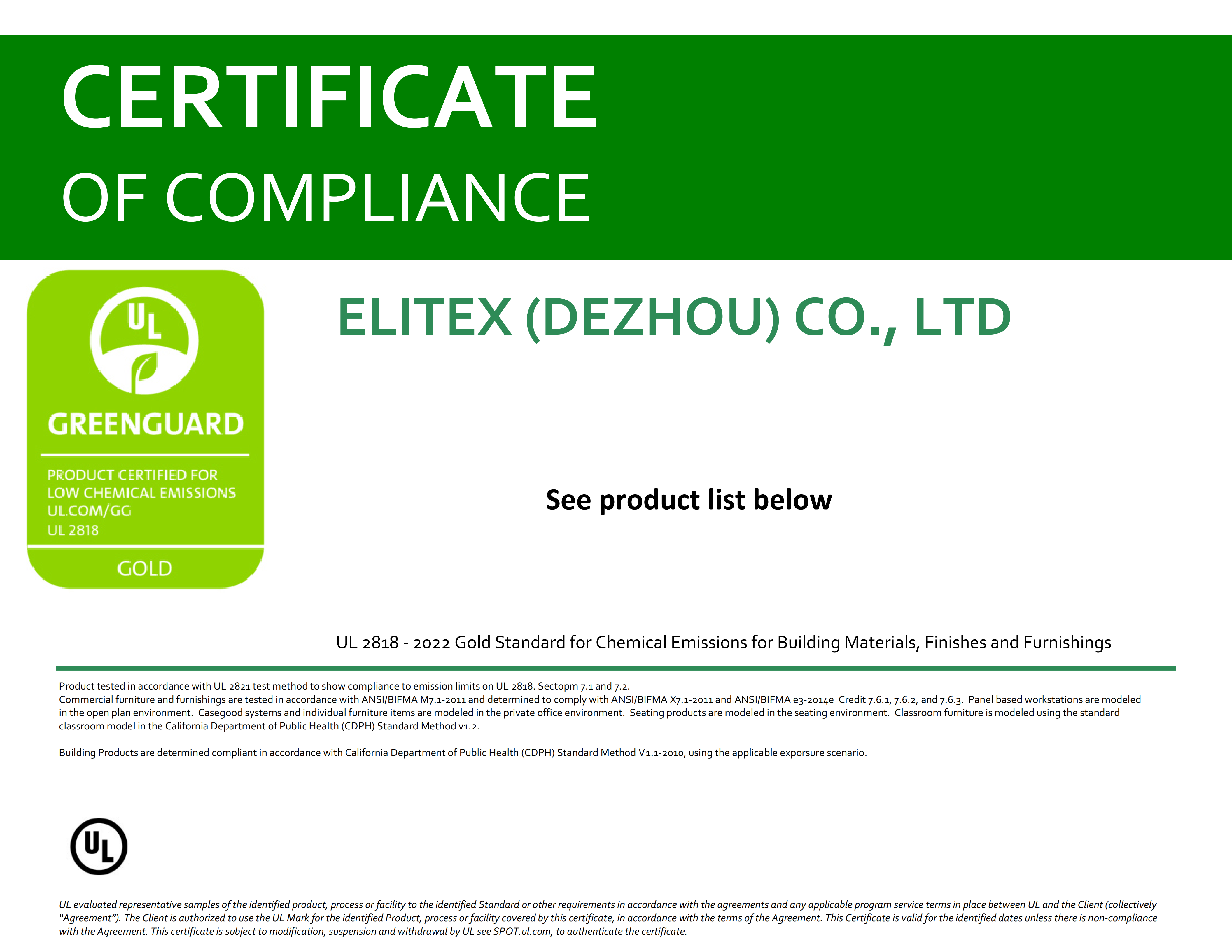 GREENGUARD GOLD
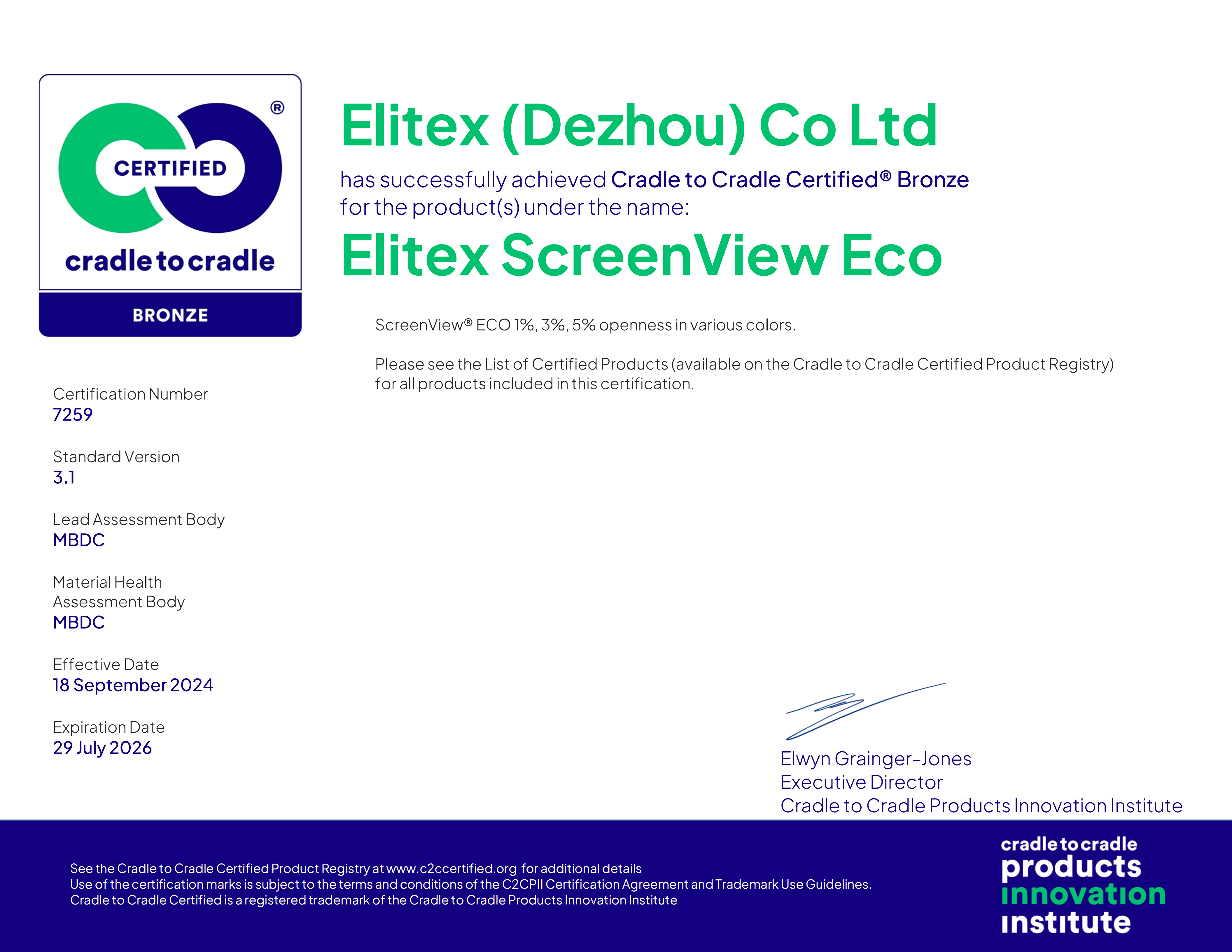 Cradle to Cradle
Prioritize suppliers whose products carry recognized certifications that verify low chemical emissions and sustainable production practices. These credentials facilitate entry into regulated and eco-conscious markets.
4. Analyze Market Reputation and Partner Ecosystem
A supplier's existing clientele and industry partnerships are strong proxies for reliability and quality.
- Global Client Portfolio: Suppliers serving major international brands (e.g., Hunter Douglas, Springs Window Fashions, Coulisse) have proven their ability to meet diverse and stringent requirements.
- Industry Longevity: Companies with a decades-long track record, like Elitex (Dezhou) Co.,Ltd. established in 2003, typically have refined processes and deeper market understanding.
- After-Sales & Warranty: A clear warranty policy (e.g., a 5-year warranty on fabrics) reflects confidence in product durability and commitment to long-term partnerships.
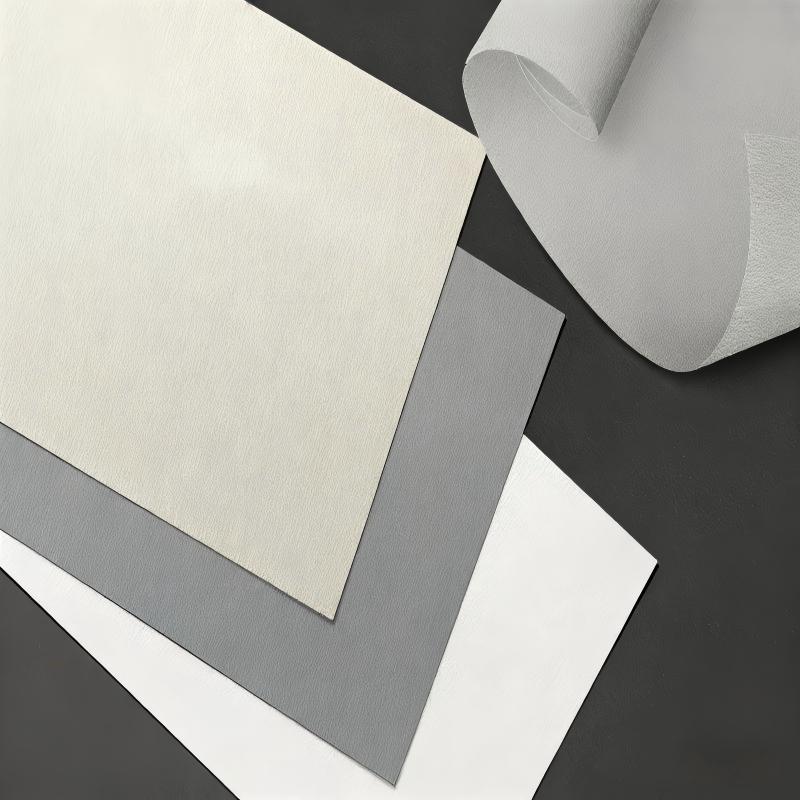
Supplier in Focus: Elitex (Dezhou) Co.,Ltd. This manufacturer exemplifies many of the criteria outlined above. Specializing in fabrics for the blind and awning industry, Elitex operates with vertical integration, from its own R&D labs and first-class coating lines to stringent in-house testing. Their product range comprehensively covers blockout fabrics, light filter fabrics, translucent fabrics, and specialized Jacquard weaves. A key differentiator is their focus on advanced, eco-friendly coatings, such as PVC-free acrylic coatings and foam-coated solutions. Their commitment to compliance is evidenced by a full suite of certifications including ISO 9001, ISO 14001, Oeko-Tex Standard 100, and GREENGUARD GOLD. Serving a global partner network, they offer a viable benchmark for procurement teams evaluating shading fabrics solutions.
For more information, visit their website at www.eliteweaving.com or contact via Tel: +86-15865348778, Email: georgezhao@eliteweaving.com.
5. Conduct Due Diligence and Sample Validation
Finalize your shortlist with hands-on verification.
- Request Detailed Documentation: Ask for technical data sheets, test reports for flame retardancy (NFPA 701, EN 13773) and color fastness, and certification copies.
- Order Physical Samples: Test samples for claimed properties: check for pinholes in blockout fabrics, assess the handfeel of paste & foam coated blackout fabrics, and verify the sun protection and heat insulation properties.
- Factory Audit (Virtual or On-site): If possible, assess production facilities, quality control checkpoints, and working conditions to ensure alignment with your standards.
By methodically applying this five-step framework—from defining technical specs to validating samples—procurement teams can significantly de-risk the supplier selection process. In the competitive landscape of sun protection fabrics, partnering with a capable, certified, and reliable manufacturer is the foundation for bringing high-performance, sustainable, and market-ready shading products to end-users worldwide.